Showing posts with label Beatrix Campbell. Show all posts

July 19, 2023

Was It the Death of the Heart?

Diana, Princess of Wales, commemorative statue
in the Sunken Garden at Kensington Palace in London


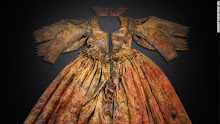
“When the royal family enfolded Diana, they thought they had got a rather dim girl from the landowning Norfolk aristocracy—not exactly the stuff of revolution. They could not have known that she would be transformed into an international superstar who would make their lives hell.” This from an article, “Diana’s Britain,” by the editors at Newsweek magazine published the week after the princess’ funeral. Some feminists of the time were also fooled by “the mouse that roared.” British journalist Beatrix Campbell wondered how more conservative Britain could become when this pretty, inexperienced girl from old landed gentry married into the stale confines of royalty. Calling her wedding gown “a shroud,” she feared Diana would disappear within a dusty patriarchal construct. But Campbell and others began to see it differently.


November 9, 2022

Whatever 'In Love' Means

With the release this month of season five of Peter Morgan's The Crown—and its emphasis on the next generation: the marriages, affairs, and divorces of three of Queen Elizabeth's children, especially spotlighting Charles and Diana—here's an excerpt from my in-progress book, The Spiritual Mission of a Princess, with notes on 'love.' As royal archetypes, were Charles and Diana simply a mismatched couple or was it a "karmic-setup"...with some divine intervention to show the world the way of the heart? 


         ~ WHATEVER 'IN LOVE' MEANS ~

Through the ages, history shows that members of royalty—including Charles, Prince of Wales—“was not encouraged or expected to follow their hearts into marriage,” as author Caroline Weber wrote in her book review of The Diana Chronicles. It was dynastic duty first: a decision about which marital alliance would best serve the realm and which eligible woman would be most likely to produce a male heir. It was about power, ownership, control.

Since the desire of one’s heart was not part of the equation in this extremely patriarchal system of marriage—where little value was put on love—then if you happened to be in love with someone who wasn’t suited for the job of royal wife or husband, consequently your lover was either forgotten or set aside for later affairs. This was just the way it was, until it wasn’t.

~ ~ ~

“In the history of the human race, the idea of romance as the prelude to marriage is very rare,” Alistair Cooke wrote in “The Quest for a Royal Bride” in a July 1981 Parade magazine article featuring the upcoming wedding of Charles and Diana. “It must come as a shock to many people to be reminded that today most marriages, high and low, in the great majority of countries, are arranged, and that the choosing is not done by the partners,” the British historian continued. “It is true, in a particular sense, of royalty. For hundreds of years, love has been the least essential element of a royal marriage. There are certain precise conditions. Once these are met, if the partners also come to love each other, so much the better.” And declaring only days before their wedding, in his famously lighthearted way, Cooke said that if Charles and Diana indeed loved each other, it would be considered “a happy accident.”

Engagement photo,left, Diana & Charles, right "The Crown" season four

As writer and humorist Nora Ephron said: “You can never know the truth of anyone’s marriage, including your own.” Underneath all the soap opera of the Wales’ arranged marriage (which pretended it was not), we don’t know much about the moments of sweetness, love and support that both Charles and Diana said were there. But we do know there was turmoil—and duplicity. Historically, in the times when arranged marriages were more typical than not, it was accepted as normal for royal and aristocratic men to have a discreetly-handled lover—and Charles took advantage of the system. But in the changing social culture of the late-twentieth century (including the evolving women’s movements), compounded by the tabloid press now exposing the private lives of royals, it all seemed hypocritical and vastly out-of-date. And the young Diana was having no part of the hypocrisy!  “For the first time this century,” as feminist author Beatrix Campbell wrote in 1998, “a woman called a future king to account for his behavior as a man.” Diana not only denounced the archaic monarchic code of “men will be men” (and the one where women stay quiet, don’t complain so not to rock the royal boat), but exposed the similar double-standard code of the patriarchy held by many men around the world.

There were probably many feelings and emotions that pushed Diana to go public about the disappointments of her marriage. There was hurt and jealousy over her husband’s infidelity, anger and disappointment, perhaps embarrassment. But underneath it all, I’d say there was the heart-achingly desire to be loved. (If not by her husband, then at least by her sympathetic public.)  
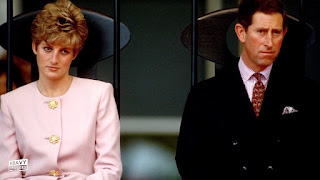
Nevertheless, “every relationship I have ever looked at Astrologically,” Steffan Vanel states, “can be seen as a ‘karmic set-up’ revealing what the evolving souls knew they would do to each other.” And it was true about Charles and Diana. “Conflictual [sic] as well as complimentary,” wrote Martha Caldwell about the astrological karma between Diana and Charles according to Vanel’s research. “Diana and Charles were perfect for each other in light of what they came to Earth to learn in this lifetime. Much of Diana’s karma surrounds her experience of relationship, so it is with Charles that she worked on her most troublesome issues.” Vanel picked up from there: “The karmic lesson for Charles has been to look inside himself to know who he really is. Diana was the perfect manifestation of a force which would pull the rug out from under his over-identification with role in his life to help him in his own evolution.”

~ ~ ~

Prince Charles caused quite a stir with his “whatever ‘in love’ means” statement during an interview with his young fiancĂ©e. But philosopher and writer Alain de Botton would have understood Charles’ frustration. Since his first book, a novel titled On Love, de Botton combined the theme of love and relationship in his writing and teaching, but not in a conventional way. The novel’s first line reads: “Every fall into love involves the triumph of hope over knowledge.” 

“Compatibility,” de Botton later wrote, “is an achievement of love. It cannot be its precondition.” His essay “Why You Will Marry the Wrong Person,” explained On Being radio host Krista Tippett, “was, amazingly, the most-read article in the New York Times in the news-drenched year of 2016. As people, and as a culture, de Botton says, we would be much saner and happier if we reexamined our very view of love. Nowhere do we realistically teach ourselves and our children,” Tippett continued, “how love deepens and stumbles, survives and evolves over time, and how that process has much more to do with ourselves than with what is right or wrong about our partner.”
We are inside a profoundly evolving world; a fundamental consciousness shift is occurring and the nature of our relationships and what we desire from them are shifting as well. But many people have been stuck in the old paradigm, expecting satisfying relationships inside an outdated model. If we are indeed all here to grow and evolve and assist with each other’s evolution, then it’s time to open our hearts—wide with generosity and compassion—so we see each other with love. And sometimes our guides into a new way of being related are unexpected ones. During her life within the archaic institution of the British monarchy and its duty-bound royal family, Princess Diana called out its hard-edged, mindset of “duty over love” and declared that she led with the heart, not with the head, and that love, real love, must always come first. It was a lesson passed on to her sons, as well as to her former husband.

So whether in a romantic relationship or just living day-to-day out in the world, there’s simply this, in the words of Marianne Williamson: “You are loved, and your purpose is to love.” ~


March 9, 2021

{Princess Mission} Book Excerpt


In this remarkable time of feminine wisdom rising, here's an excerpt from my long-in-the-works upcoming book, The Spiritual Mission of a Princess.  Like the excerpt below, each chapter begins with something from the life of Diana, Princess of Wales—a young woman of highly-developed heart energy who intrigues us still—then intertwines that legacy, seen through a more archetypal lens, with the story of all women.

.................................................................
[EXCERPT]
CHAPTER ONE: PRINCESS MISSION

  Unwittingly, the Princess had established for herself a persona that would, in time, be a phenomenon.
-Andrew Morton, Diana: Her Own Story 

L
ady Diana Spencer’s glorious emergence from the horse-drawn glass carriage on her wedding morning in the summer of 1981 set in motion mythological musings: a fairy-tale bride…a heavenly vision…the return of the goddess—“like seeing a butterfly emerge from its chrysalis,” reminisced her Victorian-inspired fairy-gown designers. Standing in hand-crafted satin slippers and crowned with old family diamonds, Diana was dressed in yards and yards of England’s own custom-dyed ivory silk taffeta, lace and tulle—voluminous and fragile—“her gown unfolding perfectly like a paper flower,” observed historian Hilary Mantel. This was beyond any superficial longing of “princess dreams”—although dreams of being a princess certainly fueled our imaginations. Diana’s appeal went deeper than our fascination with feminine beauty, or brides and weddings, or royalty and pageantry, or mysterious ancient rituals. For many watching the brilliant wedding pomp that day, the experience stirred something deep within. Historically, the vision of a bride often brings a sense of hope and renewal, but for a culture in turmoil, here was a spark that relit what once thought lost. There seemed a light about this young bride. Even if we were unaware of being affected, legends were brewing. 

Or did the anti-monarchists and second-wave feminists and other skeptics—not taken in by romance or grandeur or even possible divine intervention—have it right? This was simply another wan young woman, “shrouded” beyond recognition, “tumbling from her coach like a bride in a bag,” critiqued Mantel. From feminist writer Beatrix Campbell: “Her ivory silk wedding dress was a shroud…a crinoline, a meringue…a symbol of sexuality and grandiosity….” Diana was being led to an altar “propping up the aged patriarch who had got her into all of this” to stand with a man much beyond her years and experience who represented an outdated institution where young women disappeared into desperate disappointment. “Neither her father nor her mother had taken care of her, enlightened her or warned her. They married her off to someone else’s prince,” Campbell added. Professor Colleen Denney opens her study of how artists portrayed the princess “with the consideration that feminism and femininity collided in 1981 when Diana married.” 

Clearly there were divergent worlds colliding that day—the outdated and the shift of the ages. After all, here we were under the influence of prophetic celestial changes, long mapped out by wise ancients foretelling the end of “old time” and the beginning of a new era. As the Earth was doing what it naturally, miraculously does—tilt perfectly with an elegant wobble, and spin from equinox to equinox—its slow rotation was in the complicated process of completing two decisive cycles, thousands of years in the making, shifting energies and filling hearts above and below. Some called this swirling cosmic marvel the effects of the Age of Aquarius dawning—feminine vibrations of the Age of the Goddess that would awaken our spirit; others reverently proclaimed the “Age of Holy Breath” ushering in a time of enlightenment and expanding consciousness. Whether it was such heavenly wonders at work that day on this full-of-legends Emerald Isle, or simply the dynamic effect of two royal archetypes chosen to fulfill their soul’s mission and now moving through their predestined paces…you could not escape the sense that there was something mystical afoot. 

If this was truly an era coming to an end—with things tired and harsh falling away, things fresh and heart-tempered beginning—then how perfect that it was a wedding to send up the momentous flare seen round the world, beckoning our heart’s attention. Now under the direction of a new pole star in the Aquarian constellation, we hoped that love would, indeed, “steer the stars and peace would guide the planets” as we all embarked on this auspicious yet tumultuous journey. 

Did this young woman—who became a princess on her wedding day and after a long, winding road, the ‘queen of hearts’ upon her death—ignite a pathway for a consciousness shift of the heart? Was this a signal for the return of a nurturing goddess spirit intended to nudge along the occurring paradigm shift where we see a flowering of feminine strength and influence? During a life fluctuating between tedious soap opera and compassionate healing, how could we imagine then that Diana would be showing a way to, in the words of spiritual thinker Xavier Le Pinon, “educate the heart” on how to be tender, open, and immaculately loving? In all the pomp and glamour and personal drama, it was easy to overlook her spiritual mission. 

However, for some with eyes to see, there were clues in this enchantment on that summer-lit wedding morning on the red-carpeted steps of St. Paul’s Cathedral. There was an exquisite bridal moment captured in a memorable and intimate zoom-lens photograph, where Diana—veiled in what seemed to be the ancient mystery of womanhood—paused to look back before entering the cathedral. Possibly a moment’s hesitation before stepping toward her entrusted destiny? Perhaps it was simply to check the fluffing of her impossibly long train, stretching down the staircase. But then you see her eyes, piercing through the veil as if with an inner knowing, glancing toward some distant yet remembered past encouraging her forward. Was Diana standing in for all future brides at a time when they, too, pause at their nuptial doorway to embody, no longer a woman’s loss of autonomy and self-expression—as was the old custom of the patriarchy—but the female essence and empowering qualities of beauty, openness, strength, forgiveness, love, and the desire for true partnership? ~

February 9, 2019

{Against Feminine Nature} Book Excerpt


Excerpts from the "Against Feminine Nature" chapter of my book-in-progress, tentatively titled, A Memory of Love: The Spiritual Mission of a Princess. Enjoy....


Sarah Jennings Churchill, Duchess of Marlborough
“‘Remember, you’re a Spencer!’” biographers claimed Diana would say to herself to strengthen her resolve during stressful times. Spencers had been established in England for 500 years, amassing great wealth and political power through the centuries (and therefore much more “British” than her husband’s Windsor family). Sarah Jennings, born in 1660, wife of the 1st Duke of Marlborough and grandmother of the first Diana Spencer, was “one of the most remarkable and difficult women of her day,” wrote biographer Sarah Bradford. “The Spencer tendency for falling out with members of the family—it is said Sarah changed her will fifty times—may well have been passed down from her.” Sarah Jennings’ pride, Bradford remarked, “led her to snub even her sovereign and former friend, Queen Anne.”
Over 250 years later, when another Diana Spencer was on the scene, Queen Elizabeth, the Queen Mother, told a friend that the Spencer women are “‘extremely unusual and difficult!’” According to Bradford, the Queen Mother’s friend, who happened to be a Spencer relation, agreed and also noted “‘an unforgiving side’” that seemed to run in the family; she was of the opinion that Princess Diana’s “‘inability to sustain friendships and relationships’” was also a family characteristic. She saw similar traits in her own Spencer mother with those of Diana, especially what she called Diana’s “‘manipulation of reality’” which took on a repetitious pattern of creating conflict, then calling for a dramatic reunion, only to stir things up once again. Whether it was an “inherited” family trait or not, this emotional roller coaster must have been exhausting for all involved.
~~~
From many accounts, the psychologically needy and acutely insecure Diana was full of unresolved anger from childhood; and as an adult, her volatile temper occasionally surfaced. Sometimes there was even a warning before the crash: “‘Stand by for a mood swing, boys,’” she’d say to her private secretary, explained biographer Tina Brown. Various conditions have been cited as possible reasons for Diana’s extremes: the frustrations of not being heard, much less not being allowed a voice; chemical imbalances brought on by her bulimia; misunderstood postpartum depression; living under the stress of so much suppressed emotion for so many years; perhaps some sort of personality disorder; even complications of her complex astrological chart. Or, as I read somewhere, “anger is nothing more than an outward expression of hurt, fear and frustration.” Whatever the causes, Diana could create a disconcerting battlefield-like, walking-on-eggshells environment for everyone around—including her “desperately unhappy” husband and his reserved family with their strict code-of-behavior.
~~~
Historically, many women had difficulty in expressing anger and if they did get angry, men found it difficult to deal with the volatility. Such emotional outbursts would not only have been discouraged, it could get the disruptive woman diagnosed with “hysteria” and locked up! No wonder a woman might express her anger silently by abusing her body and health, as Diana did. “How can she manifest her anger or her grief?” asked British writer Beatrix Campbell. “If the discovery of her own disappointment could not be revealed, because it could not be tolerated, then it made sense to keep screaming….” Or worse. 

Diana’s time in the spotlight, the 1980s and ‘90s, was a period of major change for women. What many considered the second wave of feminism was ending and the “grrls” of a post-modern generation were stirring a third wave—just as the long-anticipated “great shift in consciousness” was stirring the world. Looking back, Diana was a representative of eons of women’s rising collective anger. When the young princess began speaking up about feeling abandoned by mother, husband and monarchy, women were the first to lean in and really listen. What's more, when Diana spoke out, a whole kingdom of women revealed their discontent. “It was Diana’s treatment as a woman, and her sense that she was sustained by the sympathy and strength of women, that made her dangerous” to the patriarchal establishment, Campbell added. ~


[Sarah Jennings Churchill is the character in the 2018 awarding winning film "The Favourite" played by Rachel Weiss.] 
More book excerpts soon.....

February 14, 2018

{The Woman I Love} -part two-


Continuing our "month of love" celebration (and upcoming marriage of Prince Harry and Meghan Markle) with the second part of “The Woman I Love” (excerpt from my book in progress)...and featuring a number of Windsors!
........................................................
The Woman I Love
{part two of three*}

Clearly “love isn’t everything” nor is “doing one’s duty” without the potential of deep satisfaction. There’s not simply one prescription for happiness. It’s just darn hard to follow one’s heart, however, in extreme patriarchal conditions!

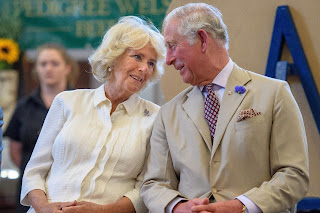
Nonetheless, change always happens. Almost seven decades after King Edward’s abdication, a change in social culture was on Charles’ side (thanks in great part to the work of his late wife.) In 2005, 24 years after his marriage of “duty,” Charles did not have to give up the throne (although there were restrictive provisions), nor start a palace revolution nor send anyone to the guillotine, yet he indeed married the woman who had been his longtime friend and confidante—the woman he had long loved—Camilla Shand Parker Bowles; now Camilla, Duchess of Cornwall. And they are a couple who seem to simply fit so well together. “What your heart thinks is great, is great,” nineteenth century American poet Ralph Waldo Emerson said. “The soul’s emphasis is always right.”

I want to look deeper at the role of love in the story of King Edward and Mrs. Simpson, the couple who later became the Duke and Duchess of Windsor. But not the fairy-tale kind of love the story became for many, inspiring films, novels and poetry. (I remember my mother talking about how romantic it all seemed to her as a teenager in Alabama, reading news of the handsome king and the sacrifice he made for “the woman he loved.”) But what did David, soon after becoming King Edward, really give up? And what was it really for? Was it indeed for love or for a woman? Or was it to transform the monarchy, to gain his freedom, or perhaps to reclaim his soul? After his abdication “David later explained that what was at stake was not a choice between love and duty, but a ‘different concept of kingship’,” journalist Beatrix Campbell wrote. (Ironically, is this closer to the “model” of kingship that his great-great nephew William—a young man with a broad and equalitarian world view—will create?) Perhaps the power and bigger message of David’s choice was tainted when he went on to live a frivolous life as the Duke of Windsor, making some unwise decisions while living in the spotlight approaching and during a world war when England was in peril. Nevertheless, “he was making a point about love, women and kingship…,” Campbell added. “Impaled between love and duty, he insisted that love was his duty.”

By her uncle choosing this path not only changed his niece Elizabeth’s life path, but set (or perhaps re-set) her on an extremely duty-bound course, declaring “duty” as the center of “the inspiring exemplar of ideal family life,” wrote Howard Chua-Eoan in Time magazine in 2007. She put the whole Windsor clan to work in a regular, day-to-day, dutiful plan of action. “Elizabeth would serve. She would persevere. She would be dutiful. She would obey.” And with such focus, maybe she missed the emotional shifts her people were going through when Diana came on the scene in the 1980s and 90s; cultural changes that Diana—“the girl chosen to refresh the line, to bear its heirs, to be the new smiling face of the family”—recognized, related and responded to, and called out the monarchy for ignoring. Yet no matter how Queen Elizabeth had carefully and dutifully constructed this façade that she believed to be true and honest, “Diana found the dynasty dysfunctional, uncertain of its work, in truth more a firm than a family,” Chua-Eoan added. “Diana tried to serve, she tried to persevere. She tried to be dutiful. But in the end, she would not obey.” Nor had King Edward. Perhaps the world was not ready for a king to “bring his heart” to the throne, but Princess Diana later got the world’s attention by revealing what happens in a family not allowed to bring its heart along with them. (It occurs to me the Windsor family’s sacrificial trade-off for being immensely rich and privileged was to do your duty and happiness be damned. That was certainly the royal culture in which both David—King Edward—and Prince Charles grew up.) 
[To Be Continued...]

{*Part two of three from "The Woman I Love"....excerpt from my book in progress, tentatively titled, A Memory of Love: The Spiritual Mission of a Princess.}

August 21, 2017

{20th Anniversary - Excerpt No. 4}


During this 20th anniversary summer of Princess Diana's death, we continue to honor her contribution to the world of wedding celebrations, but this time with a deeper philosophic twist...by sharing an excerpt from my future book, From Princess to Goddess & the Rebirth of Love (the second book in The End of the Fairy-Tale Bride series.)


{excerpt from}
Chapter One: Princess Mission

Lady Diana Spencer’s glorious emergence from the glass, horse-drawn carriage on her wedding morning in the summer of 1981 set in motion mythological musings: “a fairy-tale bride,” “a heavenly vision,” “the return of the goddess.” Dressed in voluminous yards of custom-dyed ivory silk taffeta, lace and tulle; standing in hand-crafted satin slippers and crowned with old family diamonds, this was beyond any superficial longing of “princess dreams”—although dreams of being a princess certainly fueled our imaginations. 
Diana’s appeal went deeper than our fascination with feminine beauty or brides and weddings, or with royalty and pageantry or mysterious ancient rituals. For many watching the brilliant wedding pomp that day, the experience stirred something deep within. Historically, the vision of a bride often brings a sense of hope and renewal, but for a culture in turmoil, here was a spark that relit what once thought lost. There seemed a light about this young bride. Even if we were unaware of being affected, legends were brewing.

Or did the anti-monarchists and second-wave feminists and other skeptics—not taken in by romance or grandeur or even possible divine intervention—have it right? That this was simply another wan young woman, “shrouded” beyond recognition. From feminist writer Beatrix Campbell: “Her ivory silk wedding dress was a shroud…a crinoline, a meringue…a symbol of sexuality and grandiosity….” She was being led to an altar “propping up the aged patriarch who had got her into all of this” to stand with a man much beyond her years and experience who represented an outdated institution where young women disappeared into desperate disappointment. “Neither her father nor her mother had taken care of her, enlightened her or warned her. They married her off to someone else’s prince….” ~


...................................................................

[Scroll down for earlier {20th Anniversary} posts excerpted from The End of the Fairy-Tale Bride]


June 8, 2017

{20th Anniversary - Excerpt No. 2}


During this 20th anniversary summer of Princess Diana's death, I continue honoring her immense contribution to the world of wedding celebrations and fashion with excerpts from my book, The End of the Fairy-Tale Bride: For Better or Worse, How Princess Diana Rescued the Great White Wedding. Enjoy....


{excerpt from}
Chapter Four: "Bringing Back the Mystery"

Princess Diana did not invent our fascination with royalty; stories of nobility and their grand rituals have long captured our attention. However, “royalty acquired the status of stardom when she entered the royal enclosure,” British journalist Beatrix Campbell wrote and, post-1981, weddings once again became society’s favorite pomp and posh circumstance dress-up ritual.


I opened my former bridal store in Atlanta on the wave of Diana’s wedding magic, between the two Windsor royal weddings that decade, and my designers were busy creating “princess gowns” for years: elegant fluffs of ivory silk with big crinoline skirts, full sleeves with delicate bows, corseted bodices, and hand-beaded trims of antique lace. Worn with gossamer tulle veils and—since my customers weren’t yet enamored with tiaras—designer-made headpieces sprinkled with vintage wax orange blossoms and bits of old lace. Something very dreamy and womanly was ignited in the process. 


Bridal veils made a come-back with Diana like they did in the nineteenth century with Prince Charles’ great-great-great grandmother. Although Queen Victoria’s short Honiton lace veil in 1840 was “decorative only,” pinned to her chignon and falling softly over her shoulders, Diana’s was lush and sparkly and, breaking with royal tradition, covered her face for a much fussed-over “virginal” arrival into St. Paul’s cathedral on her father’s arm. Many feminists called it a “shroud.” And for some modern young women of the time just beginning to revel in their independence and sexual freedom, wearing a bridal veil indeed seemed a bit out-of-date, if not out-of-touch. 

Not insensitive to world politics of the 1980s and ‘90s—the years I had my shop—my focus, however, was helping a bride feel just as beautiful inside as she looked outside. I loved the look of the sheer illusion veil like Diana’s that seemed to connect a woman with something deeply feminine and quietly mysterious. Worn over the face, it helped block out the noisy, distracting world, and move her attention within—similar to how a slow, deep breathy inhale and exhale return us to our true self, more in touch with our heart.~