Showing posts with label "The Spiritual Mission of a Princess". Show all posts

August 6, 2025

A Divine Destiny


Orchid named for Diana, Princess of Wales

“The people asserted their deep longing to feel at one, if only for today,” Warren Colman wrote about the days following Princess Diana’s death as crowds gathered in London parks and along city streets. “Tomorrow we will assert our differences, tomorrow we will return to the struggle to live together…. For today, just for today, we will take the opportunity to feel what it might be like to be together, to feel at one, to share an experience with everyone else.” It was the final days of summer in 1997, and the world was evolving, moving into a new millennium full of remarkable revelations. A future was emerging that would demand our attention.

For the woman who once declared that she “leads from the heart,” Diana’s death pierced our own. Perhaps this was Diana’s biggest gift to us: To give humanity a taste of feeling related and connected through the heart, to experience something tenderly shared, to have an opportunity “to feel at one” in a divided, divisive world. And to long for more.

Colman told of listening to many interviews during those days between Diana’s death and her funeral service, as people came together in public spaces simply to be together. “I think that the people who have come to be a part of it are part of it,” shared a local, fifties-something man who had congregated with thousands of others outside Westminster Abbey during Diana’s funeral. “Whereas before it always felt as though you were pure spectators to something else — it was what belonged to someone else.” The idea of being a part of something, a sense of belonging, intimately connected, was deeply present here — just as it was for me watching on television from over 4000 miles away. “Royal occasions were royal occasions,” the man in the park continued while balancing a baby on his shoulders, “and we were just subjects to stand by. But this, I think, has been different insofar as people haven’t just been spectators, they’ve been there taking part in it….”

“Diana’s death seemed to offer possibilities for reflection and perhaps even transformation,” Josephine Evetts-Secker wrote, also in When a Princess Dies, with people not feeling a need to be “exceptional or individual” but simply to be together. “‘I just had to be here, to take my place in the crowd,’” Evetts-Secker shared about one young woman interviewed amongst the peaceful, orderly masses of people assembled around central London that week. (“The mobilization of police, in anticipation of serious disturbances, proved unnecessary.”) “Some mystery had taken hold of the nation and beyond, with a palpable but inchoate sense of spiritual need,” Evetts-Secker added.

Something unfamiliar was indeed developing here. What appeared to have “taken hold” of people was the desire to go inwards, perhaps soothe an old ache stuck there and breathe in new life, then move back out into the world more open and available to connect with others. Diana’s death had shaken loose centuries of bottled-up emotions, new awarenesses were emerging.

Continue reading book excerpt on Medium

July 19, 2023

Was It the Death of the Heart?

Diana, Princess of Wales, commemorative statue
in the Sunken Garden at Kensington Palace in London


“When the royal family enfolded Diana, they thought they had got a rather dim girl from the landowning Norfolk aristocracy—not exactly the stuff of revolution. They could not have known that she would be transformed into an international superstar who would make their lives hell.” This from an article, “Diana’s Britain,” by the editors at Newsweek magazine published the week after the princess’ funeral. Some feminists of the time were also fooled by “the mouse that roared.” British journalist Beatrix Campbell wondered how more conservative Britain could become when this pretty, inexperienced girl from old landed gentry married into the stale confines of royalty. Calling her wedding gown “a shroud,” she feared Diana would disappear within a dusty patriarchal construct. But Campbell and others began to see it differently.


November 9, 2022

Whatever 'In Love' Means

With the release this month of season five of Peter Morgan's The Crown—and its emphasis on the next generation: the marriages, affairs, and divorces of three of Queen Elizabeth's children, especially spotlighting Charles and Diana—here's an excerpt from my in-progress book, The Spiritual Mission of a Princess, with notes on 'love.' As royal archetypes, were Charles and Diana simply a mismatched couple or was it a "karmic-setup"...with some divine intervention to show the world the way of the heart? 


         ~ WHATEVER 'IN LOVE' MEANS ~

Through the ages, history shows that members of royalty—including Charles, Prince of Wales—“was not encouraged or expected to follow their hearts into marriage,” as author Caroline Weber wrote in her book review of The Diana Chronicles. It was dynastic duty first: a decision about which marital alliance would best serve the realm and which eligible woman would be most likely to produce a male heir. It was about power, ownership, control.

Since the desire of one’s heart was not part of the equation in this extremely patriarchal system of marriage—where little value was put on love—then if you happened to be in love with someone who wasn’t suited for the job of royal wife or husband, consequently your lover was either forgotten or set aside for later affairs. This was just the way it was, until it wasn’t.

~ ~ ~

“In the history of the human race, the idea of romance as the prelude to marriage is very rare,” Alistair Cooke wrote in “The Quest for a Royal Bride” in a July 1981 Parade magazine article featuring the upcoming wedding of Charles and Diana. “It must come as a shock to many people to be reminded that today most marriages, high and low, in the great majority of countries, are arranged, and that the choosing is not done by the partners,” the British historian continued. “It is true, in a particular sense, of royalty. For hundreds of years, love has been the least essential element of a royal marriage. There are certain precise conditions. Once these are met, if the partners also come to love each other, so much the better.” And declaring only days before their wedding, in his famously lighthearted way, Cooke said that if Charles and Diana indeed loved each other, it would be considered “a happy accident.”

Engagement photo,left, Diana & Charles, right "The Crown" season four

As writer and humorist Nora Ephron said: “You can never know the truth of anyone’s marriage, including your own.” Underneath all the soap opera of the Wales’ arranged marriage (which pretended it was not), we don’t know much about the moments of sweetness, love and support that both Charles and Diana said were there. But we do know there was turmoil—and duplicity. Historically, in the times when arranged marriages were more typical than not, it was accepted as normal for royal and aristocratic men to have a discreetly-handled lover—and Charles took advantage of the system. But in the changing social culture of the late-twentieth century (including the evolving women’s movements), compounded by the tabloid press now exposing the private lives of royals, it all seemed hypocritical and vastly out-of-date. And the young Diana was having no part of the hypocrisy!  “For the first time this century,” as feminist author Beatrix Campbell wrote in 1998, “a woman called a future king to account for his behavior as a man.” Diana not only denounced the archaic monarchic code of “men will be men” (and the one where women stay quiet, dont complain so not to rock the royal boat), but exposed the similar double-standard code of the patriarchy held by many men around the world.

There were probably many feelings and emotions that pushed Diana to go public about the disappointments of her marriage. There was hurt and jealousy over her husband’s infidelity, anger and disappointment, perhaps embarrassment. But underneath it all, I’d say there was the heart-achingly desire to be loved. (If not by her husband, then at least by her sympathetic public.)  
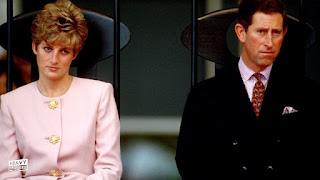
Nevertheless, “every relationship I have ever looked at Astrologically,” Steffan Vanel states, “can be seen as a ‘karmic set-up’ revealing what the evolving souls knew they would do to each other.” And it was true about Charles and Diana. “Conflictual [sic] as well as complimentary,” wrote Martha Caldwell about the astrological karma between Diana and Charles according to Vanel’s research. “Diana and Charles were perfect for each other in light of what they came to Earth to learn in this lifetime. Much of Diana’s karma surrounds her experience of relationship, so it is with Charles that she worked on her most troublesome issues.” Vanel picked up from there: “The karmic lesson for Charles has been to look inside himself to know who he really is. Diana was the perfect manifestation of a force which would pull the rug out from under his over-identification with role in his life to help him in his own evolution.”

~ ~ ~

Prince Charles caused quite a stir with his “whatever ‘in love’ means” statement during an interview with his young fiancĂ©e. But philosopher and writer Alain de Botton would have understood Charles’ frustration. Since his first book, a novel titled On Love, de Botton combined the theme of love and relationship in his writing and teaching, but not in a conventional way. The novel’s first line reads: “Every fall into love involves the triumph of hope over knowledge.” 

“Compatibility,” de Botton later wrote, “is an achievement of love. It cannot be its precondition.” His essay “Why You Will Marry the Wrong Person,” explained On Being radio host Krista Tippett, “was, amazingly, the most-read article in the New York Times in the news-drenched year of 2016. As people, and as a culture, de Botton says, we would be much saner and happier if we reexamined our very view of love. Nowhere do we realistically teach ourselves and our children,” Tippett continued, “how love deepens and stumbles, survives and evolves over time, and how that process has much more to do with ourselves than with what is right or wrong about our partner.”
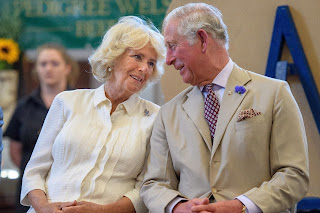
We are inside a profoundly evolving world; a fundamental consciousness shift is occurring and the nature of our relationships and what we desire from them are shifting as well. But many people have been stuck in the old paradigm, expecting satisfying relationships inside an outdated model. If we are indeed all here to grow and evolve and assist with each other’s evolution, then it’s time to open our hearts—wide with generosity and compassion—so we see each other with love. And sometimes our guides into a new way of being related are unexpected ones. During her life within the archaic institution of the British monarchy and its duty-bound royal family, Princess Diana called out its hard-edged, mindset of “duty over love” and declared that she led with the heart, not with the head, and that love, real love, must always come first. It was a lesson passed on to her sons, as well as to her former husband.

So whether in a romantic relationship or just living day-to-day out in the world, there’s simply this, in the words of Marianne Williamson: “You are loved, and your purpose is to love.” ~


September 8, 2022

Femininity As Power

In honor of Queen Elizabeth II, and all women who have taken on leadership roles in a man's world (either by birth or by determination and talent), here's an excerpt from my book-in-progress, The Spiritual Mission of a Princess. This section, Femininity As Power, is from the "Dressing for the Illusion" chapter....enjoy.

........................................................................

Several years ago, Nancy Kidwell, who at the time was head costume curator at the Smithsonian, addressed an all-male audience of museum executives regarding the urgency of funding their institutions costume departments. Kidwell recalled that she shocked this “sea of gray suits” when she declared: “If you think clothes aren’t important, then try going to work without them!” For women, their clothes are not only “important,” but they inspire a running critique. Any woman, royal or otherwise, who is in the public eye must deal with the criticism and judgment about her “wardrobe”—just check the press coverage on Hillary Clinton or Sarah Palin or Margaret Thatcher or any number of prominent women in politics. 

In the culture-shifting 1980s, as women’s roles were changing and more and more women opened their own businesses, ran for political office, entered the workforce once restricted to “men only,” taking on leadership positions in offices and boardrooms, women’s fashions powered-up as well. The man-tailored, hard-edged suits with heavy shoulder pads were like a woman’s “armor” to help her move through a man’s world—Margaret Thatcher comes to mind. And whether it was an intentional feminine gesture or just the Prime Minister’s preference, she always wore skirts. 

Of course, Queen Elizabeth always wears skirts—it’s her inherent style. But it’s also a way to stand out in a man’s world, a show of femininity as power. When I returned to work on this long-in-progress book, the third season of Peter Morgan’s television series The Crown premiered in 2019. “I’ve come to realize more than ever,” wrote Sophie Gilbert in The Atlantic, “how the series uses clothing to explore and subvert ideas about power, and what it looks like when a woman wields it.” (This particular season of The Crown was recreating the world of Queen Elizabeth II from the mid-1960s into the late 1970s.) “Typically when women gain access to a man’s world in popular culture, they dress the part, adopting masculine tailoring and fabrics. The Queen is different. Her gender, and her femininity, are intrinsic to the way she governs.” Gilbert describes the opening scene of the first episode as the image of the Queen, played by Olivia Colman, comes into focus “surrounded by a phalanx of men in dark suits. She, by contrast, wears a lilac dress with a love-knot detail over her breastbone, high-heeled black shoes, and pale stockings…. Her authority is such that the men around her bend slightly backward when she enters the room, as if to surrender even the airspace to the head of state.” 
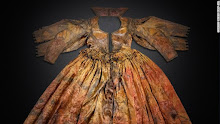
Actresses portraying QEII in "The Crown" television series

This is why costume designers are key to the appeal and success of films and television programs. Picture
Game of Thrones, The Lord of the Rings, or Downton Abbey—their costumes so essential to character development and overall production values. Costume designer Michelle Clapton, who was lured away from her remarkable run with Game of Thrones for most of its season five to create the costumes for the pivotal first season of The Crown, explained: “Correct costuming has its own primary role in enabling the actors to inhabit their characters. I’m the first person they really spend time with; the rehearsals come later. When they put the clothes on, and you get it right, you do see them transform….”

Angela Kelly, the real Queen’s senior dresser beginning in the late 1990s and by 2001 her in-house designer, used several techniques to emphasize Queen Elizabeth’s femininity, as well as her authority. Kelly revealed in her book, The Other Side of the Coin: The Queen, the Dresser and the Wardrobe, that she uses striking, vibrant colors for the Queen’s daytime wardrobe, not because they’re the Queen’s favorites, but to “allow her to stand out from the crowd and be visible to the well-wishers who have come to see her.” These are intentional gestures by the Queen and her staff meant to be courteous, diplomatic, and, as Gilbert sees it, a way “to underscore her own authority”—to underscore femininity as power. Something many women are now embracing with a confident stride, again. ~


August 31, 2022

A Remembrance of the Heart

photo by Mario Testino

Twenty-five years ago today a princess died and the world was never the same. Diana's heart-centered, deeply feminine sensibility was preparing us for changes to come...changes of the heart. From the Introduction of my still-in-progress book, The Spiritual Mission of a Princess....


DIANA AS MESSENGER

We are in a most remarkable moment in history. Feminine wisdom, suppressed through the ages, is reclaiming her respected place in global culture—and in the human heart. Many have championed its re-emergence—that more compassionate, inclusive, tender side of ourselves—and many have been met with pointed resistance. But the female creative spirit can be denied no longer, the forgotten beloved now has a name, and the power of a woman’s gift is poised to bring the world back into balance.

photo by Mario Testino

Historically, there have been royal archetypes, far from being perfect human beings yet seen as “messengers”—some thought to be divinely guided, their roles designed to help light our paths, even playing a part in shifting consciousness, resetting human potential, and, as with one such messenger, Diana, Princess of Wales, representing the return of a womanly presence, a heart’s vision, or as she called it, simply the need for “a woman’s touch” in a hard-edged world. In this pivotal, between-the-worlds time of universal changes, of feminine wisdom rising, it’s the perfect moment to explore this celebrated life through a different lens, a lens focused on the heart as a way to capture Diana’s true legacy—and how it interweaves with the story of all women—then set alight her spiritual mission in us all. 

photo by Mario Testino

Was Diana Spencer Mountbatten-Windsor’s life, in Shakespeare’s princely words, about “cracking open a noble heart”—and with her death, our own? There are times when someone’s true influence and contributions only become known when we take a step back to see a broader view of what that life awakened in the world. And we’re now living in that awakening. Carried by a bold feminine impulse, we are being transported into a new future, into a higher order of relating, being connected with something precious and intimate within us to share with each other…something we only dared to ever imagine.

July 15, 2022

"Heart Star" - Book Excerpt


In my long-in-progress book,  The Spiritual Mission of a Princess: Diana and the Return of the Heart, I often reference an anthology published months after Princess Diana's death...When A Princess Dies: Reflections from Jungian Analysts. In my chapter, "The Sight of Stars," I quote Renos Papadopoulos about distinctions of stars in the heavens and celebrities who have a 'star quality': 

Stars are self-sufficient and independent entities in so far as they shine from within and do not follow anybody else's orbit. It must have been these attributes of stars, in addition to their distant, mysterious and magic qualities, that have prompted people to describe certain celebrities as 'stars'.

Enjoy an excerpt of "The Sight of Stars" chapter....

.........................

HEART STAR

She was a 'flawed' star and this brought her

closer to the people, who loved the idea 

 that a star could also be so near to them.

-Renos K. Papadopoulos, 

When A Princess Dies: 

Reflections from Jungian Analysts


“The etymology of the English word ‘star’ comes from a very old root with similar words in most ancient languages,” wrote Renos K. Papadopoulos in When a Princess Dies. However, the Greek version of the word, aster, “reveals an interesting twist.” It is related to the word teirea that translates to “‘the heavenly constellations, signs’…and to teras which is ‘a sign, wonder, marvel, of any appearance or event, in which men believed that they could see the finger of God, and read the future,’” Papadopoulos continued; “hence, teras also refers to ‘anything that serves as a divine sign or omen.’” Many viewed such ‘star signs’ and ‘divine omens’ in the life and death of Princess Diana.

An “incandescent star that illuminated both the earth and skies,” wrote Stewart Pearce about Diana, not seeing the Princess’ stardom as simply superficial celebrity, but saw her as a divinely-inspired being following her spiritual mission. Pearce, who spoke about his confidential position as a voice and presence coach during the last two years of Diana’s life, writes ardently about her celestial connections and “world saving” fate which was “set to illuminate the conviction of love, joy and charity….”

Oprah Winfrey wrote eloquently about how we are all precious human beings “given an almighty gift,” destined to live a life we love. And she also acknowledges there are those who shine a bit more brilliantly. “Then along comes an anointed one, who given the chance shines as brightly as the pole star. These are the shining ones who lead the way, and Diana was such a one!” Divinely touched, yet poignantly human.

photo by Mario Testino
The star-lit words used to describe Princess Diana in life and death: luminous, radiant, inner light, shining from within, incandescent—whether used literally or metaphorically—also suggested something of a spiritual nature. Just as such words also point to that person’s life being a guidepost of sorts, a sign, a message to pay attention, changes ahead. And for Diana, her message was through the heart, she was signaling the world that it was time for change. It was time for a return to love…and she was indeed shining a light to guide the way.

But there was another etymological twist Papadopoulos pointed out relating to Diana and her complex persona. Those ancient star-related words, teirea and teras, are related to the verb teiro which he defines as “to rub away: of the effects of pain, sorrow on body and mind…to suffer, to be distressed. This is the root of ‘trauma’, as well.” We see this in Diana and other celebrity stars. In addition to “the glitter and glamour there is often something ominous, even dark about them…likely to have traumatic histories.” Papadopoulos connected Diana’s star quality with her trauma this way: “Her sparkling disposition had a sense of tragedy about it, her splendor was closely associated with disarming simplicity, and her joy was almost visibly linked with her pain.”


Diana greeting and shaking
hands with AIDS patient.
Yet the other side of the meaning of teiro, Papadopoulos explained, is also a reference to “healing and rubbing away the effects of pain and anguish. In other words, in addition to their external twinkling grandeur, stars could be the agents of both distress and healing.” Clearly with Diana, healing was part of her spiritual mission in life and death. In life, she demonstrated the nature of loving touch and attention; when her death cracked open hearts around the world, a deep cleansing began in the soul of humanity. Diana’s “radiating shine,” as Papadopoulos defined it, spread far and wide, “affecting the widest possible variety of people”…no one was left out. And twenty or so years after her death, Diana’s sons, left traumatized and suffering as boys, found their way, through love, especially the loving support of their wives, to healing their own mental and emotional anguish—and courageously shared about their experiences as a healing gesture to help others find their way to wholeness, and to love.
Indeed, being an advocate for mental health has become the main focus of Prince Harry's work, using his 'star' quality to draw attention to the well-being of others. ~

October 25, 2021

Diana Spencer Mountbatten-Windsor

Another film featuring a slice of the life of Diana, Princess of Wales, premieres on November 5th.  Spencer, starring Kristen Stewart, is called a “psychological drama that follows Diana’s decision to end her marriage to Prince Charles and leave the British royal family.” (The “decision” was a bit more complicated than that for all involved, especially Diana and Charles’ sovereign, Queen Elizabeth.) Nonetheless, using this occasion, I’ll post a short excerpt from my book in progress, The Spiritual Mission of a Princess….

....................................................

Chapter 3: Social Changes (excerpt)

           “When the royal family enfolded Diana, they thought they had got a rather dim girl from the landowning Norfolk aristocracy—not exactly the stuff of revolution. They could not have known that she would be transformed into an international superstar who would make their lives hell.” This from an article, “Diana’s Britain,” by the editors at Newsweek magazine published the week after the princess’ funeral. Some feminists of the time were also fooled by “the mouse that roared.” British journalist Beatrix Campbell wondered how more conservative Britain could become when this pretty, inexperienced girl from old landed gentry married into the stale confines of royalty. Calling her wedding gown “a shroud,” she feared Diana would disappear within a dusty patriarchal construct. But Campbell and others began to see it differently.

Diana emerged into the world’s consciousness during the second year of Margaret Thatcher’s landmark run as Prime Minister and Great Britain, entrenched in a recession, was in turmoil with the country’s traditional industries in crisis and race riots destroying neighborhoods in the cities. “Into this unrelieved gloom the royal wedding injected a welcome splash of color and glamour,” the Newsweek article continued. “For that reason alone, Diana always carried a fund of good will with her. Yet at the time, few appreciated the central significance of the new princess; she was young and unformed, with enormous potential for growth.” And indeed, from that summer in 1981, Diana’s growth into a striking, outspoken woman paralleled Britain’s own growth into the modern era. Diana may have spent her childhood in the country, but as a young woman she needed the bustle and stimulation of the city and like much of the country’s youth, Diana loved “London’s glitzy rebellious values.” And for better or worse, she brought “an American style of emotionalism,” as feminist writer Naomi Wolf expressed, “to the rigid skin of British formality.”  

The Labor Party picked up this youthful call to modernize with forty-three-year-old Tony Blair’s campaign for prime minister in 1997. Since his “agenda echoed Diana’s,” according to Catherine Mayer’s Time magazine article, “How Diana Transformed Britain,” Diana met in secret with him and his election team in support of Blair’s “mandate to build a more inclusive, caring Britain.”  By the time of her death, only months after Blair’s election, she seemed to embody “how new Britons wanted their country to be.” After centuries of practiced reserve and mystery, it took the Royal Family a little longer to realize how much the country was changing even though they had clues inside their own family which had been moving, as Newsweek reported, “from archaic rule to modern dysfunctionality.” Then the shock of the princess’ death left them unprepared for the rising new era of more open public self-expression—the unbuttoning of England’s stiff-upper-lip sensibility. “The People’s Princess,” Mayer wrote, summing up Diana’s impact, “had unlocked hearts, reordered values, presided at the triumph of emotional intelligence over cold intellect, of compassion over tradition.”

July 1, 2021

{Education of the Heart} Book Excerpt

July 1, 2021. Princes William and Harry unveiling memorial stature of their mother,
Diana, Princess of Wales, in the Kensington Palace Gardens.


Excerpt from 

Education of the Heart 

final chapter

The Spiritual Mission of a Princess

{my still-in-the-works book}


With the enlightening gift of hindsight, hazy fragments of life can fall into place: “Oh, that’s what he was trying to tell us.” “Oh, that was the real message of her life.” Millions of words have been written about Diana Spencer Mountbatten-Windsor’s life and death. Some focused on the superficial and sentimental, the fashionably theatrical storyboard of her life; others focused on glorifying the virtuous humanitarian, even romanticizing her ‘saintly’ nature. (So it goes with a beautiful and tragic charismatic figure.) It’s a more mindful version of the latter that interested me. A flawed yet deeply empathetic princess, under the brightest spotlight on the planet, stands up to the short-sighted patriarchal powers-that-be, puts heart over head, kindness over duty, love over fear. That’s not only courageous, but in a cynical and discordant world, it’s downright subversive! And looking back, this was Diana’s spiritual mission, a mission that ties directly to this present moment as women’s voices are leading the conversation. This is the reason many of us are here during this tumultuous consciousness shift: to anchor the receptive, mystical, powerful, primal energies of the feminine and the reflective, grounded, gentle warrior energies of the masculine—to anchor old soul values, compassionate impulses, and the Earth’s promise of paradise.  

“When he turned 18,” reported royal correspondent Katie Nicholl, “Harry vowed to continue Diana’s charity work, making a public pledge ‘to carry on the things that she didn’t quite finish.’” When Prince Harry turned 36, the same age as his mother when she died, he had some of the same concerns that she had about royal life—its advantages and its limitations. “This is a man who said he wanted to continue his mother’s work,” added biographer Omid Scobie. “We’ve long mourned Diana’s place on the humanitarian landscape, and here we have Harry, who embodies her values and is willing to dedicate his life to them.” Inspired by Diana’s love and experience, and his own deep commitment and empathetic nature, Harry put his wife and son first. He chose his heart.


When we make that kind of choice, a new world opens up, our path becomes clearer, our wings lighter, and the once improbable becomes destined. We find the courage to love, then love again; to let go, then let go again; to let go of the past that no longer serves our evolution in being human. “Human evolution” is the game at hand, claims spiritual visionary Gary Zukav, and it’s also what’s at stake. In this decisive time of the transformation of human consciousness, it’s no longer viable to postpone the sometimes-painful interior work—whether it’s our rage or jealousy or grief—it’s time to face it. And Prince Harry has established a platform with a worldwide audience to courageously lead the way. It’s a hero’s journey, a heroine’s quest, an intimate rite of passage we’re all to take. It’s a journey of a lifetime and it’s the journey each of us chose.  


We may be in a time where it feels like everything precious is at risk. But it’s important to remember that in “between times” like these our perceptions change, things may not be what they seem, miracles happen. This is the era of reconciliation. As we explore this feminine heartbeat pulsing through the world—getting stronger, more powerful, more focused—we reach out to the masculine energies to join in, to make a quantum leap together in creating this new era of harmony. So it’s fitting that we revisit Diana’s life-gift that broke open this “head to heart” revolution as a reminder that love is the only way in and the only way out. ~

March 9, 2021

{Princess Mission} Book Excerpt


In this remarkable time of feminine wisdom rising, here's an excerpt from my long-in-the-works upcoming book, The Spiritual Mission of a Princess.  Like the excerpt below, each chapter begins with something from the life of Diana, Princess of Wales—a young woman of highly-developed heart energy who intrigues us stillthen intertwines that legacy, seen through a more archetypal lens, with the story of all women.

.................................................................
[EXCERPT]
CHAPTER ONE: PRINCESS MISSION

  Unwittingly, the Princess had established for herself a persona that would, in time, be a phenomenon.
-Andrew Morton, Diana: Her Own Story 

L
ady Diana Spencer’s glorious emergence from the horse-drawn glass carriage on her wedding morning in the summer of 1981 set in motion mythological musings: a fairy-tale bride…a heavenly vision…the return of the goddess—“like seeing a butterfly emerge from its chrysalis,” reminisced her Victorian-inspired fairy-gown designers. Standing in hand-crafted satin slippers and crowned with old family diamonds, Diana was dressed in yards and yards of England’s own custom-dyed ivory silk taffeta, lace and tulle—voluminous and fragile—“her gown unfolding perfectly like a paper flower,” observed historian Hilary Mantel. This was beyond any superficial longing of “princess dreams”—although dreams of being a princess certainly fueled our imaginations. Diana’s appeal went deeper than our fascination with feminine beauty, or brides and weddings, or royalty and pageantry, or mysterious ancient rituals. For many watching the brilliant wedding pomp that day, the experience stirred something deep within. Historically, the vision of a bride often brings a sense of hope and renewal, but for a culture in turmoil, here was a spark that relit what once thought lost. There seemed a light about this young bride. Even if we were unaware of being affected, legends were brewing. 

Or did the anti-monarchists and second-wave feminists and other skeptics—not taken in by romance or grandeur or even possible divine intervention—have it right? This was simply another wan young woman, “shrouded” beyond recognition, “tumbling from her coach like a bride in a bag,” critiqued Mantel. From feminist writer Beatrix Campbell: “Her ivory silk wedding dress was a shroud…a crinoline, a meringue…a symbol of sexuality and grandiosity….” Diana was being led to an altar “propping up the aged patriarch who had got her into all of this” to stand with a man much beyond her years and experience who represented an outdated institution where young women disappeared into desperate disappointment. “Neither her father nor her mother had taken care of her, enlightened her or warned her. They married her off to someone else’s prince,” Campbell added. Professor Colleen Denney opens her study of how artists portrayed the princess “with the consideration that feminism and femininity collided in 1981 when Diana married.” 

Clearly there were divergent worlds colliding that day—the outdated and the shift of the ages. After all, here we were under the influence of prophetic celestial changes, long mapped out by wise ancients foretelling the end of “old time” and the beginning of a new era. As the Earth was doing what it naturally, miraculously does—tilt perfectly with an elegant wobble, and spin from equinox to equinox—its slow rotation was in the complicated process of completing two decisive cycles, thousands of years in the making, shifting energies and filling hearts above and below. Some called this swirling cosmic marvel the effects of the Age of Aquarius dawning—feminine vibrations of the Age of the Goddess that would awaken our spirit; others reverently proclaimed the “Age of Holy Breath” ushering in a time of enlightenment and expanding consciousness. Whether it was such heavenly wonders at work that day on this full-of-legends Emerald Isle, or simply the dynamic effect of two royal archetypes chosen to fulfill their soul’s mission and now moving through their predestined paces…you could not escape the sense that there was something mystical afoot. 

If this was truly an era coming to an end—with things tired and harsh falling away, things fresh and heart-tempered beginning—then how perfect that it was a wedding to send up the momentous flare seen round the world, beckoning our heart’s attention. Now under the direction of a new pole star in the Aquarian constellation, we hoped that love would, indeed, “steer the stars and peace would guide the planets” as we all embarked on this auspicious yet tumultuous journey. 

Did this young woman—who became a princess on her wedding day and after a long, winding road, the ‘queen of hearts’ upon her death—ignite a pathway for a consciousness shift of the heart? Was this a signal for the return of a nurturing goddess spirit intended to nudge along the occurring paradigm shift where we see a flowering of feminine strength and influence? During a life fluctuating between tedious soap opera and compassionate healing, how could we imagine then that Diana would be showing a way to, in the words of spiritual thinker Xavier Le Pinon, “educate the heart” on how to be tender, open, and immaculately loving? In all the pomp and glamour and personal drama, it was easy to overlook her spiritual mission. 

However, for some with eyes to see, there were clues in this enchantment on that summer-lit wedding morning on the red-carpeted steps of St. Paul’s Cathedral. There was an exquisite bridal moment captured in a memorable and intimate zoom-lens photograph, where Diana—veiled in what seemed to be the ancient mystery of womanhood—paused to look back before entering the cathedral. Possibly a moment’s hesitation before stepping toward her entrusted destiny? Perhaps it was simply to check the fluffing of her impossibly long train, stretching down the staircase. But then you see her eyes, piercing through the veil as if with an inner knowing, glancing toward some distant yet remembered past encouraging her forward. Was Diana standing in for all future brides at a time when they, too, pause at their nuptial doorway to embody, no longer a woman’s loss of autonomy and self-expression—as was the old custom of the patriarchy—but the female essence and empowering qualities of beauty, openness, strength, forgiveness, love, and the desire for true partnership? ~