Showing posts with label Prince Harry. Show all posts

June 24, 2026

Redefining Masculinity, Redefining Courage

digitalfrontierinstitute.org


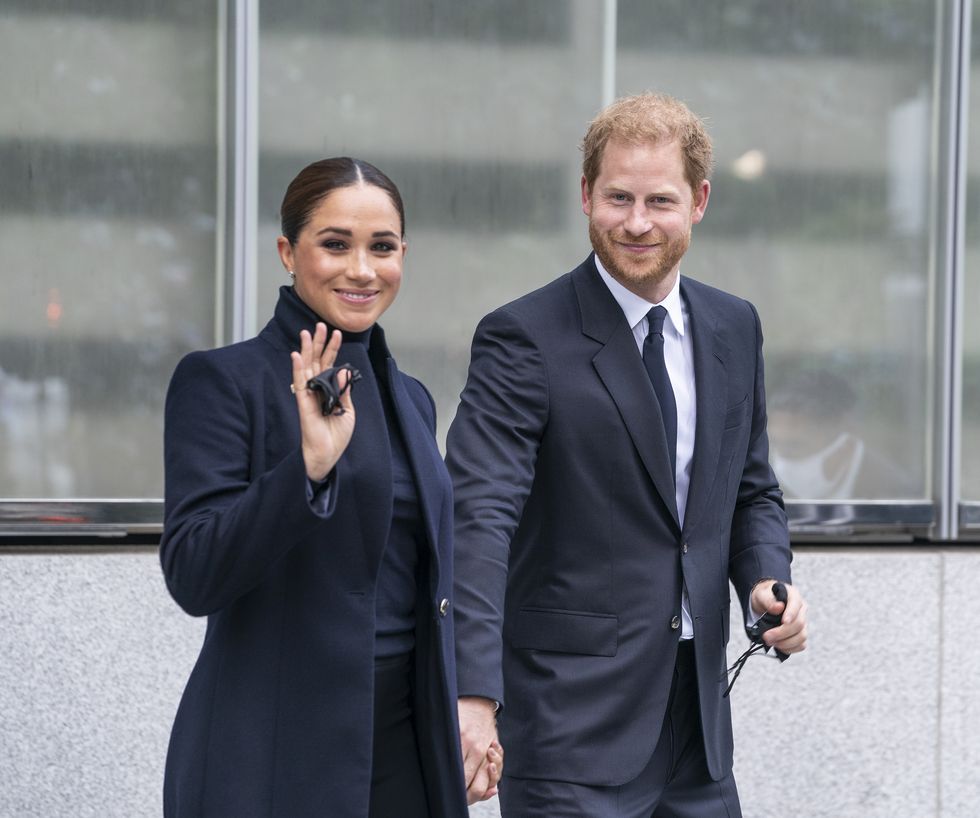
“It’s time to redefine masculinity,” Prince Harry stated during an official Commonwealth tour made with his wife and young son to South Africa in 2019. Given the strict German and British duty-bound heritage of his Windsor family — that calls for its menfolk to be aloof, manly, and in control — Harry, the former military man and now self-proclaimed feminist, is an inspiring representative of the courage it takes to build a new archetype of being male. Brushing off the tired old sexist tropes tossed his way (especially the one that he’d been “emasculated” married to a strong, out-spoken woman), Harry seems stronger, devotedly focused, delighted with hands-on fatherhood, and thriving inside a powerful, deeply loving partnership.

Perhaps a man’s relationship with women is a key component in redefining masculinity. In their celebrated podcast series, Renegades: Born in the USA — which inspired a bestselling book in 2021 — the conversations of two old friends and brothers-of-the-heart, President Barack Obama and Bruce Springsteen, acknowledged the rewards of being married to a spirited, forthright woman, praising the guidance received from their wise and powerful wives. “We were lucky enough,” Obama said, speaking of both men’s lives, “to find remarkable, strong, independent women to push us and challenge us and ground us — and to call us out on our BS.” I could see Prince Harry’s experience in Obama’s words. “Women who helped us,” Obama continued, “become better versions of ourselves and forced us to continually reexamine our priorities.”

Read the entire article on Medium


April 3, 2024

My Duty Is to Love

 Through the years of reading biographies and books focused on Princess Diana—in my studies of women’s history and royal archetypes—I always held royal biographer Sally Bedell Smith as a fair and trustworthy voice. So I was surprised and disappointed recently when she appeared to join misogynistic and patriarchal-leaning writers by referring to strong women as “domineering” and deeply feeling men as “weak.”

On a promotional tour for her new book, another about the British royal family, Bedell Smith compared King Edward VIII and Wallis Simpson, the Duke and Duchess of Windsor, to Prince Harry and Meghan Markle, the Duke and Duchess of Sussex. Calling Harry “weak” like the Duke of Windsor—because, if I’m understanding her reasoning, both men fell in love with strong women—and saying that “in some respects Meghan and the Duchess of Windsor have similar qualities: very narcissistic, very controlling, very dominating”—because, again, if I’m understanding her premise, that they were/are strong women. (Et tu…even you, Sally?)

However, people who know Meghan Markle—and those more inclined to take the high road— would describe her qualities as “confident, assured, and being a leader.” And she was vilified for that—like other women who dared to step outside the narrow Windsor box. As I see it, Meghan, this accomplished, heart-guided woman, fell in love with a man of great heart—compassionate, caring, sensitive, courageous—a man who was a fellow activist motivated by creating a kinder world, all in the name of love. (And a man who inherited his mother’s “exquisite sensitivity of feeling,” in the words of Jungian analyst Jim Fitzgerald, and is committed to continuing her humanitarian vision.)

[Click here to read the entire article posted on MEDIUM]


September 20, 2023

A Wedding Classic Revisited

from GETTY IMAGES

“On May 19, 2018, the royal nuptials of the Duke and Duchess of Sussex made history and broke traditions, with the bride Meghan Markle’s wedding dress almost serving as an allegory,” Fawnia Soo Hoo wrote in her recent article, “Meghan Markle’s Wedding Dress Nods to Hollywood and American Royalty,” for Vanity Fair.


I love that this “allegorical wedding, this extraordinary couple, and Meghan’s sensitive and intuitive creativity is being revisited in such a beautiful article. Fawnia chats with the gowns designer, Clare Waight Keller, about its inspiration and her collaboration with the bride, noting other memorable wedding gowns....

“There was that sense of playfulness and modernity and doing things in a different way,” Waight Keller says. “And I really feel that—for the dress, particularly—that sense of it could be something that really represented her, her spirit, her modernity, and the freshness....”

Click on the article here...

from GETTY IMAGES

Also revisit the article I wrote a few days after that memorable wedding in 2018 and posted here: “A Day of Gracious Gestures and Love Power....

The radiant bride, in designer-sculpted shimmering white silk....

from GETTY IMAGES
In addition, Ive written about Harry and Meghans spiritual union in a section of a book I've been working on for many years, using this lovely quote from a friend of the bride: 

Meghan’s friend Vicky Tsai, after attending the wedding ceremony, confirmed: “It felt like a moment where the world paused and celebrated love.”


July 19, 2023

Was It the Death of the Heart?

Diana, Princess of Wales, commemorative statue
in the Sunken Garden at Kensington Palace in London


“When the royal family enfolded Diana, they thought they had got a rather dim girl from the landowning Norfolk aristocracy—not exactly the stuff of revolution. They could not have known that she would be transformed into an international superstar who would make their lives hell.” This from an article, “Diana’s Britain,” by the editors at Newsweek magazine published the week after the princess’ funeral. Some feminists of the time were also fooled by “the mouse that roared.” British journalist Beatrix Campbell wondered how more conservative Britain could become when this pretty, inexperienced girl from old landed gentry married into the stale confines of royalty. Calling her wedding gown “a shroud,” she feared Diana would disappear within a dusty patriarchal construct. But Campbell and others began to see it differently.


December 29, 2022

Falling In Love

Enjoy another excerpt from my book-in-progress,   The Spritual Mission of a Princess....

..................................................................

Much has been written about how Diana Spencer fell in love with an “image” of Prince Charles and not with the man. But she would not be the first person to objectify another, falling in love with a concept, a persona, an impression “instead of discovering who is really there,” as spiritual teacher Patricia Albere shared. In her book, Evolutionary Relationships, Albere wrote about the principles (including engagement, commitment, truth, trust, openness, intimacy, sensitivity, influence, and true autonomy) required to deepen any relationship—whether friend, family member, or lover—into a mutual awakening of beloved souls…into an “evolutionary relationship.” Then, ‘falling in love’ becomes something else altogether. “When you enter into an Evolutionary Relationship with a sexual partner,” explained Albere, “you have the opportunity to discover who your partner really is and what is possible between you…and what is needed to turn your relationship into a sacred marriage, a spiritual union.” 

Perhaps Diana had some intuitive, old-soul knowing of this kind of sacred union, but like most people, she didn’t know what it would take to have it—and especially, how to prepare for it. It takes emotional maturity, the courage to be transparent, a heightened level of spiritual awakening, patience—“a sacred connection cannot be forced,” as Albere wrote. 

I was reminded of what Meghan Markle said about the day she married Diana’s son Prince Harry—her wedding a global spectacle—with millions of people watching, appreciating, judging. “H and I are really, really good at finding each other in the chaos. When we find each other, we reconnect to, like, ‘Oh it’s you. It’s you.’” She added that it wasn’t as though the rest of it didn’t matter—the royal setting, the elegantly appointed trappings of the wedding—but “it feels temporary.” In such a spiritual union as they appear to have, it’s the connection, the love that feels real, feels eternal. (And those of us watching that lovely celebration of marriage could feel it as well.) Meghan’s friend Vicky Tsai, after attending the wedding ceremony, confirmed: “It felt like a moment where the world paused and celebrated love.”

Although Diana might have yearned for this level of intimate connection with a partner, in the pretense-riddled ‘arranged marriage’ framework of her Windsor world, such depth and harmony and spiritual bonding was not possible. Even with her heart-centered sensibility, all Diana had to go on when she married was her teenage romance-novel imagination, a wounded child’s neediness, and society’s outdated notion of the ‘institution’ of marriage. Her frustration and deep disappointment lashed out toward her husband with anger and blame, privately and, stunningly (given the ‘never complain, never explain’ mantra of the royal family), publicly.

        In Diana: The Voice of Change, Stewart Pearce wrote how Princess Diana’s spot-lit marriage to the heir to the British throne put a spotlight on the archaic customs associated with marriage as well as on a woman’s autonomy—or lack of it. “Diana’s feminine force had disowned the negative masculine when she ‘outed’ Charles, calling for a new level of maturity and truth.” Feminist writers believed that when Diana found a way to speak out about the inauthentic aspects of their marriage—her bold actions condemned at the time by some as outrageous, even scandalous—other women were emboldened to find their voice. “This released the voice of millions of women, who felt that Diana had given them the right to speak,” Pearce added. He believed you could follow the thread that got unraveled in her public revelations about ‘men behaving badly’ directly to the Time’s Up and MeToo movements over two decades later.

        As human consciousness was expanding in the last two decades of the twentieth century, parallel to Diana’s time in the spotlight, the nature of relationships and structure of marriage was transforming. In The Seat of Soul, Gary Zukav saw a more enlightened future when intimate relationships would be “spiritual partnerships” where both people thrive and the focus is on each other’s spiritual growth—evolving from the old, less empowering “five-sensory relationships.”  The more consciously aware “multisensory humans,” in Zukav’s words, naturally gravitate toward “spiritual partnerships.” (Maybe Diana sought guidance here since this culture-changing book was published in the late 1980s when her marriage was a gloomy mess.) Zukav explained that “spiritual partners help one another recognize parts of their personalities that come from love—such as gratitude, patience, and caring—and cultivate them by acting on them consciously.” Being conscious, awake to the subtleties of life, and emotionally courageous were key here. Zukav continued: “Spiritual partners also help one another recognize parts of their personalities that come from fear—such as anger, jealousy, and righteousness—and challenge them by acting from loving parts of their personalities (such as patience) when frightened parts (such as impatience) are active.” (Perhaps Diana wasn’t emotionally grounded enough, especially in those early years of marriage, to practice these principles, but this language, I believe, would have resonated with her.)

In addition to the cultural shifts in relationships and marriage at the time, the hard edge of masculine/feminine identity was also changing as many women were recognizing their “masculine” traits (speaking up for themselves, becoming leaders) and some men were acknowledging their “feminine” nature (being more compassionate and nurturing), shaking up an old societal template for gender. As human beings were evolving, long-accepted yet limiting ways of being and relating were dissolving—new guidelines were required for fully satisfying relationships. “The ‘Till death do us part’ paradigm within marriage,” Pearce wrote, “no longer could remain a meaningful construct for the bonds of deep relationship.”

        Looking back over the more than two decades since Diana’s death, Stewart Pearce was seeing how marriages that had been “sustained by the old ways of co-dependency” were ending and how both women and men were “releasing the obsolete stereotypes” of marriage so they could have relationships of deep connection of the heart. “At core, the patriarchy, which had flourished through a malformation of the masculine, was being transformed on the altar of the newly sacralized feminine,” Pearce continued with his usual passion. “Love, compassion, inclusivity, nurturing, and peaceful co-existence are what we yearn for, are what we seek out in our intimate relationships….” This sounds most ‘natural’ for us now, but at the time and in the environment in which Diana lived, when she declared these loving aspects missing in her marriage—indeed, in most marriages she saw in her aristocratic world—it was revolutionary. ~

[Part Two of this section from the chapter "A Woman's Inheritance" will be posted later....]

July 15, 2022

"Heart Star" - Book Excerpt


In my long-in-progress book,  The Spiritual Mission of a Princess: Diana and the Return of the Heart, I often reference an anthology published months after Princess Diana's death...When A Princess Dies: Reflections from Jungian Analysts. In my chapter, "The Sight of Stars," I quote Renos Papadopoulos about distinctions of stars in the heavens and celebrities who have a 'star quality': 

Stars are self-sufficient and independent entities in so far as they shine from within and do not follow anybody else's orbit. It must have been these attributes of stars, in addition to their distant, mysterious and magic qualities, that have prompted people to describe certain celebrities as 'stars'.

Enjoy an excerpt of "The Sight of Stars" chapter....

.........................

HEART STAR

She was a 'flawed' star and this brought her

closer to the people, who loved the idea 

 that a star could also be so near to them.

-Renos K. Papadopoulos, 

When A Princess Dies: 

Reflections from Jungian Analysts


“The etymology of the English word ‘star’ comes from a very old root with similar words in most ancient languages,” wrote Renos K. Papadopoulos in When a Princess Dies. However, the Greek version of the word, aster, “reveals an interesting twist.” It is related to the word teirea that translates to “‘the heavenly constellations, signs’…and to teras which is ‘a sign, wonder, marvel, of any appearance or event, in which men believed that they could see the finger of God, and read the future,’” Papadopoulos continued; “hence, teras also refers to ‘anything that serves as a divine sign or omen.’” Many viewed such ‘star signs’ and ‘divine omens’ in the life and death of Princess Diana.

An “incandescent star that illuminated both the earth and skies,” wrote Stewart Pearce about Diana, not seeing the Princess’ stardom as simply superficial celebrity, but saw her as a divinely-inspired being following her spiritual mission. Pearce, who spoke about his confidential position as a voice and presence coach during the last two years of Diana’s life, writes ardently about her celestial connections and “world saving” fate which was “set to illuminate the conviction of love, joy and charity….”

Oprah Winfrey wrote eloquently about how we are all precious human beings “given an almighty gift,” destined to live a life we love. And she also acknowledges there are those who shine a bit more brilliantly. “Then along comes an anointed one, who given the chance shines as brightly as the pole star. These are the shining ones who lead the way, and Diana was such a one!” Divinely touched, yet poignantly human.

photo by Mario Testino
The star-lit words used to describe Princess Diana in life and death: luminous, radiant, inner light, shining from within, incandescent—whether used literally or metaphorically—also suggested something of a spiritual nature. Just as such words also point to that person’s life being a guidepost of sorts, a sign, a message to pay attention, changes ahead. And for Diana, her message was through the heart, she was signaling the world that it was time for change. It was time for a return to love…and she was indeed shining a light to guide the way.

But there was another etymological twist Papadopoulos pointed out relating to Diana and her complex persona. Those ancient star-related words, teirea and teras, are related to the verb teiro which he defines as “to rub away: of the effects of pain, sorrow on body and mind…to suffer, to be distressed. This is the root of ‘trauma’, as well.” We see this in Diana and other celebrity stars. In addition to “the glitter and glamour there is often something ominous, even dark about them…likely to have traumatic histories.” Papadopoulos connected Diana’s star quality with her trauma this way: “Her sparkling disposition had a sense of tragedy about it, her splendor was closely associated with disarming simplicity, and her joy was almost visibly linked with her pain.”


Diana greeting and shaking
hands with AIDS patient.
Yet the other side of the meaning of teiro, Papadopoulos explained, is also a reference to “healing and rubbing away the effects of pain and anguish. In other words, in addition to their external twinkling grandeur, stars could be the agents of both distress and healing.” Clearly with Diana, healing was part of her spiritual mission in life and death. In life, she demonstrated the nature of loving touch and attention; when her death cracked open hearts around the world, a deep cleansing began in the soul of humanity. Diana’s “radiating shine,” as Papadopoulos defined it, spread far and wide, “affecting the widest possible variety of people”…no one was left out. And twenty or so years after her death, Diana’s sons, left traumatized and suffering as boys, found their way, through love, especially the loving support of their wives, to healing their own mental and emotional anguish—and courageously shared about their experiences as a healing gesture to help others find their way to wholeness, and to love.
Indeed, being an advocate for mental health has become the main focus of Prince Harry's work, using his 'star' quality to draw attention to the well-being of others. ~

March 1, 2022

Celebrating Women's History...


...and honoring women who honor women!

Meghan Markle has long supported women's rights...even when she was a little girl and before she became the Duchess of Sussex. When she married long-time activist Prince Harry, she then had a dedicated partner in support of empowering women. Now their Archewell Foundation extends her reach and influence in improving the lives of women--and therefore children--worldwide. 

This support gets magnified during Women's History Month in March each year as they expand contributions with grants, recognitions--and sometimes a cake! (This one baked in her own kitchen for volunteers at the World Central Kitchen.)


"Part of Archewell Foundation's core commitment is to build strong, compassionate, and equitable communities across the world. Although these grants have been announced as we recognize Women's History Month, the work they represent is relevant and vital every day of the year," the Duke and Duchess of Sussex said. (People Magazine) Putting "compassion into action" is a lifetime commitment for both Meghan and Harry.

Salute to Freedom gala 2021


July 1, 2021

{Education of the Heart} Book Excerpt

July 1, 2021. Princes William and Harry unveiling memorial stature of their mother,
Diana, Princess of Wales, in the Kensington Palace Gardens.


Excerpt from 

Education of the Heart 

final chapter

The Spiritual Mission of a Princess

{my still-in-the-works book}


With the enlightening gift of hindsight, hazy fragments of life can fall into place: “Oh, that’s what he was trying to tell us.” “Oh, that was the real message of her life.” Millions of words have been written about Diana Spencer Mountbatten-Windsor’s life and death. Some focused on the superficial and sentimental, the fashionably theatrical storyboard of her life; others focused on glorifying the virtuous humanitarian, even romanticizing her ‘saintly’ nature. (So it goes with a beautiful and tragic charismatic figure.) It’s a more mindful version of the latter that interested me. A flawed yet deeply empathetic princess, under the brightest spotlight on the planet, stands up to the short-sighted patriarchal powers-that-be, puts heart over head, kindness over duty, love over fear. That’s not only courageous, but in a cynical and discordant world, it’s downright subversive! And looking back, this was Diana’s spiritual mission, a mission that ties directly to this present moment as women’s voices are leading the conversation. This is the reason many of us are here during this tumultuous consciousness shift: to anchor the receptive, mystical, powerful, primal energies of the feminine and the reflective, grounded, gentle warrior energies of the masculine—to anchor old soul values, compassionate impulses, and the Earth’s promise of paradise.  

“When he turned 18,” reported royal correspondent Katie Nicholl, “Harry vowed to continue Diana’s charity work, making a public pledge ‘to carry on the things that she didn’t quite finish.’” When Prince Harry turned 36, the same age as his mother when she died, he had some of the same concerns that she had about royal life—its advantages and its limitations. “This is a man who said he wanted to continue his mother’s work,” added biographer Omid Scobie. “We’ve long mourned Diana’s place on the humanitarian landscape, and here we have Harry, who embodies her values and is willing to dedicate his life to them.” Inspired by Diana’s love and experience, and his own deep commitment and empathetic nature, Harry put his wife and son first. He chose his heart.


When we make that kind of choice, a new world opens up, our path becomes clearer, our wings lighter, and the once improbable becomes destined. We find the courage to love, then love again; to let go, then let go again; to let go of the past that no longer serves our evolution in being human. “Human evolution” is the game at hand, claims spiritual visionary Gary Zukav, and it’s also what’s at stake. In this decisive time of the transformation of human consciousness, it’s no longer viable to postpone the sometimes-painful interior work—whether it’s our rage or jealousy or grief—it’s time to face it. And Prince Harry has established a platform with a worldwide audience to courageously lead the way. It’s a hero’s journey, a heroine’s quest, an intimate rite of passage we’re all to take. It’s a journey of a lifetime and it’s the journey each of us chose.  


We may be in a time where it feels like everything precious is at risk. But it’s important to remember that in “between times” like these our perceptions change, things may not be what they seem, miracles happen. This is the era of reconciliation. As we explore this feminine heartbeat pulsing through the world—getting stronger, more powerful, more focused—we reach out to the masculine energies to join in, to make a quantum leap together in creating this new era of harmony. So it’s fitting that we revisit Diana’s life-gift that broke open this “head to heart” revolution as a reminder that love is the only way in and the only way out. ~

August 5, 2019

{Forces for Change}

Meghan Markle, the Duchess of Sussex, is the guest editor of the September issue of British Vogue titled Forces for Change — learn about her empowering vision for women and girls and the world:

From Chevaz Clarke at CBS News:
“To have the country’s most influential beacon of change guest edit British Vogue at this time has been an honour, a pleasure and a wonderful surprise,” the magazines editor-in-chief, Edward Enninful, said of the historic collaboration. “As you will see from her selections throughout this magazine, she is also willing to wade into more complex and nuanced areas, whether they concern female empowerment, mental health, race or privilege.”

From Page Six by Elana Fishman:
“The Forces for Change issue highlights a diverse selection of women from all walks of life, each driving impact and raising the bar for equality, kindness, justice and open mindedness,” according to a post from the Duchess and Duke of Sussex’s official Instagram account shared.

Jacinda Ardern
The lineup, photographed for the cover by Peter Lindbergh, includes models/activists Adwoa Aboah, Adut Akech and Christy Turlington, Somali boxer Ramla Ali, New Zealand Prime Minister Jacinda Ardern, diversity advocate Sinéad Burke, “Crazy Rich Asians” star Gemma Chan and actress and LGBTQ+ advocate Laverne Cox, notably the first trans person to ever appear on the title’s cover.

Chimamanda Ngozi Adichie
It also features actresses/activists Jane Fonda, Salma Hayek and Yara Shahidi, Royal Ballet principal Francesca Hayward, body positivity warrior Jameela Jamil, feminist author Chimamanda Ngozi Adichie and teen climate activist Greta Thunberg.

Additionally, there’s a 16th spot on the cover featuring a silver reflective mirror, so readers can see themselves amongst these change-makers.

Also inside the issue? An exclusive interview between Markle, 37, and former first lady Michelle Obama as well one between Prince Harry and legendary primatologist Jane Goodall, along with a guest editor’s letter penned by Markle.

Adut Akech
“These last seven months have been a rewarding process, curating and collaborating with Edward Enninful, British Vogue’s editor-in-chief, to take the year’s most-read fashion issue and steer its focus to the values, causes and people making impact in the world today,” the Duchess of Sussex told the magazine.

“Through this lens I hope you’ll feel the strength of the collective in the diverse selection of women chosen for the cover as well as the team of support I called upon within the issue to help bring this to light. I hope readers feel as inspired as I do, by the ‘Forces for Change’ they’ll find within these pages.”

Greta Thunberg
Enninful told British Vogue that Markle declined to appear on the cover herself. “From the very beginning, we talked about the cover — whether she would be on it or not,” he explained. “In the end, she felt that it would be in some ways a ‘boastful’ thing to do for this particular project. She wanted, instead, to focus on the women she admires.”

Still, according to Lindbergh, that didn’t stop Markle from being hands-on when it came to photographing the issue’s cover. “My instructions from the Duchess were clear: ‘I want to see freckles!'” the famed photog told the glossy. [end of Page Six article]
......................

May 19, 2019

{A Gracious Year of Kindness}


In honor of the first wedding anniversary of Prince Harry and  Meghan Markle (and their spiritual partnership shared with the world), I'm reconnecting you to the article I wrote following their inspired ceremony last spring..."A Day of Gracious Gestures and Love Power"...enjoy.

Also, a link to the "Sussex Royal" Instagram account where the couple shared never-released photos from the May 19th wedding! xoxo


April 14, 2019

{Goddess Journey} Part Two


Sharing another section from the Goddess Journey chapter of my book-in-progress, A Memory of Love: The Spiritual Mission of a Princess.

 The Reappearing Goddess

“In the middle of the 1970s,” a decade before most of the world became aware of Lady Diana Spencer—and before she added her own ‘goddess’ essence to modern culture“a paradigm shift took place, partly inspired by the rapid development of the women’s movement,” wrote Lanier Graham. The author of Goddesses told of various books of the time that “revolutionized how people looked at the roots of their spiritual heritage.”

Before books like The Goddesses and Gods of Old Europe by archaeologist Marija Gimbutas and When God Was a Woman by art historian Merlin Stone, then later in 1987, a heralded game-changer, The Chalice and the Blade by Riane Eisler, “history textbooks had been stating or implying that the male had always been dominant in Western theology.” The consciousness-shifting winds of the more open-minded Aquarian Age were blowing through—energies we saw in the social upheavals of the 1960s and ‘70s—and a truer history of women was being revealed. “Western culture had been dominated by the male-oriented values of Indo-European culture for so long that it took a social revolution—the women’s movement—to start to bring it into balance,” explained Graham.

Discoveries in archaeology, studies in mythology, scholars of social history and linguistics were finding that “goddess cultures tended to be egalitarian, earth-centered, and nonviolent,” and these findings were then being taught in colleges and universities. “The image of the earth as sacred and society as balanced between male and female,” Graham wrote in 1997, “has become a powerful inspiration to people in the women’s movement, the ecology movement, and many other new ways of thinking.”

Joseph Campbell reminded us: “The goddess represents nature. The god represents society. And when you have a mythology that accents a god over a goddess you have a religion that accents society over nature. Then with the Fall, nature itself is cursed.” As we felt these goddess nudges in the first years of the twenty-first century, it was only natural that women and family issues of health and well-being and concerns about the environment were in the headlines. (Our Mother Earth, after all, is metaphorically represented by women’s bodies.) “There is something coming up in our own consciousness now, with the ecology movement,” Campbell wrote over fifty years ago, “recognizing that by violating the environment in which we are living, we are really cutting off the energy and the source of our own living.” It is this “sense of accord” that is so disrupted today. No wonder humans are so out-of-sorts; they have not been in accord with themselves, their very nature, since this break in consciousness. No wonder with the power of this reappearing goddess energy that so much fear-based, women-bashing backlash has been stirred up!

I had a real-life experience of this years ago, and a reflection of the hateful conflicts now on the rise today. In the late 1990s, a friend and I went on a day-long road trip from Atlanta to Huntsville, Alabama, to see an exhibit at the Space Center, where neither of us had ever visited. We turned off the expressway and while driving through the rural countryside, I saw a sign with huge, hand-painted letters; it was like a punch in the gut similar to what I felt on November 9, 2016. The message read: “FATHER CHURCH, YES. MOTHER NATURE, NO.”

That seems to sum up this violent backlash coming at us today, as I sit here writing in 2018—with the toxic masculine and the dark feminine trying to destroy the “mother” in all of us, the nurturing spirit of humanity, the health and well-being of our life-sustaining home, our sacred mother, our “Mother Earth.”

Lanier Graham gives us this history, writing at the end of the twentieth century:

...a few thousand years ago many goddess-oriented civilizations were destroyed by extremely aggressive Indo-European tribes. They demolished the old cities and then reconfigured civilization throughout most of the settled world from Greece to India. These barbarians worshipped aggressive sky gods and had scant room in their theology for goddesses; to them, women were little more than property and sexual objects. Not only did male gods become supreme, but females lost their sacredness, in a dramatic turning-around in human history that my friend Joseph Campbell called the ‘patriarchal inversion.’ It was even argued by some fathers of the early Christian Church in Rome that women had no souls. Twentieth-century men have at last started to realize that when males lost their reverence for that which is female, they also lost something within themselves.

The grasping, last-gasp obscenities of this “patriarchal inversion” were on display in the dignified halls of the United States Senate Building in Washington D.C. in the autumn of 2018 when leering, screeching white men defended their outdated network of cruelty and cronyism—no matter the cost or number of souls squandered—against one lone, brave woman speaking her truth. (And whether anyone was aware or not, she was representing the goddess spirit in us all.) This cowardly mischief was cheered on by a president whose motto seems to come directly from Dr. Victor Frankenstein’s patched-together monster, as written by Mary Shelley two-hundred years ago: “If I cannot inspire love, I will cause fear.”

This is what happens when humanity is disconnected from the “spiritual feminine,” Jim Fitzgerald wrote in “The Death of the Heart,” his essay for When a Princess Dies. “Since Reformation times, there has been a dearth of religious imagery, particularly of women, through which both men and women might maintain a connection to the spiritual feminine.” What imagery that remained left “a divine King but no Queen” in both the consciousness and unconsciousness of men and women. This created a split, according to Fitzgerald, as the feminine spirit became an object of “the rational mind”—and its profane opinions and deprived thoughts. “This split—of mind from matter, of spirit from nature—has continued to the present.” However, when he wrote this at the time of Diana’s death, near the end of a millennium, Fitzgerald was among many who sensed things were changing. “The values of the heart, not those of the mind, have begun to be sought after and appreciated. A new relationship to the Earth and Nature is growing. We are witnessing a change of heart.” 

The rise of Trumpery—and the hate it stands for and the “loss of soul” it reveals—is a desperate strike against this new heart energy. “I think it was this that Diana, as a woman of the times, equally a sufferer from the ills and neuroses of modern life, it was this new heart that she represented,” Fitzgerald added. And it is this “new heart”—a sacred calling of the “spiritual feminine”—that Diana and Charles’ sons inherited and now speak its message, as well as live its values, from their spot-lit world stage. These are aware, awakening men—who attracted and married aware, awake women—and they are rallying the “new heart” troops, encouraged along by the reemerging goddess consciousness their mother helped crack open!

I think of Diana and her sons when I read lines from a Sharon Olds’ poem about feeling less raw after experiencing such heartache, “as if some goddess of humanness within us caressed us with a gush of tenderness.”


[Glorious Inanna,” third and final section of this goddess-focused chapter, posted soon.]