Showing posts with label Gary Zukav. Show all posts

June 24, 2026

Redefining Masculinity, Redefining Courage

digitalfrontierinstitute.org


“It’s time to redefine masculinity,” Prince Harry stated during an official Commonwealth tour made with his wife and young son to South Africa in 2019. Given the strict German and British duty-bound heritage of his Windsor family — that calls for its menfolk to be aloof, manly, and in control — Harry, the former military man and now self-proclaimed feminist, is an inspiring representative of the courage it takes to build a new archetype of being male. Brushing off the tired old sexist tropes tossed his way (especially the one that he’d been “emasculated” married to a strong, out-spoken woman), Harry seems stronger, devotedly focused, delighted with hands-on fatherhood, and thriving inside a powerful, deeply loving partnership.

Perhaps a man’s relationship with women is a key component in redefining masculinity. In their celebrated podcast series, Renegades: Born in the USA — which inspired a bestselling book in 2021 — the conversations of two old friends and brothers-of-the-heart, President Barack Obama and Bruce Springsteen, acknowledged the rewards of being married to a spirited, forthright woman, praising the guidance received from their wise and powerful wives. “We were lucky enough,” Obama said, speaking of both men’s lives, “to find remarkable, strong, independent women to push us and challenge us and ground us — and to call us out on our BS.” I could see Prince Harry’s experience in Obama’s words. “Women who helped us,” Obama continued, “become better versions of ourselves and forced us to continually reexamine our priorities.”

Read the entire article on Medium


December 5, 2025

Those 'Something Old' Wedding Vows


Scene of Queen Victoria and Prince Albert's wedding, c1840


Those 'Something Old' Wedding Vows

{Part Two of “Marriage and the ‘Prospect of Happiness’”}

A bride is a woman with a fine prospect of happiness behind her. -Ambrose Bierce, 19th century journalist


After years of badly-behaved Hanoverian kings, their niece, nineteen-year-old Princess Victoria, became the queen of England in 1838. “The emphasis upon Victoria’s sheltered upbringing, her maidenly modesty and her dependence on her first prime minister,” historical novelist Philippa Gregory explained, “emphasized the subservience of all women — even a queen.” Although Victoria was a feisty, strong-willed, smart, determined young woman, she believed her own second-class status because of her gender.

This inequality had been deeply embedded in the patriarchal-controlled culture for centuries, reinforced at every traditional “Westernized” wedding ceremony. Women promised “to obey” their husbands when saying their marriage vows — vows written in the Church of England’s Book of Common Prayer from 1549. And vows repeated into the twentieth century.


“On her marriage to Prince Albert in 1840,” Gregory continued, “Victoria signaled her obedience to her husband as master of the household, her deference to him as an advisor and her role as domestic woman: a wife and mother, supporting the idea that a happy marriage was created and nourished by female submission, however important the wife might be.” So even with a woman on the throne, a married woman’s “prospect of happiness” remained in question.

However, Victoria became queen at a time of robust social activism that put attention on women’s rights in both England and the United States, including a move to change marriage laws. As the most powerful woman in the world, Queen Victoria’s example in marriage was influential and far-reaching. This may have hindered, but it did not stop the growing movement for women’s autonomy. Plus, there was another feisty woman on the other side of the Atlantic. Susan B. Anthony, who chose not to marry so she’d be free to dedicate her life campaigning for a woman’s right to vote in the U.S., declared: “No man is good enough to govern a woman without her consent.”


[continue reading "Those 'Something Old' Wedding Vows" on MEDIUM]


December 29, 2022

Falling In Love

Enjoy another excerpt from my book-in-progress,   The Spritual Mission of a Princess....

..................................................................
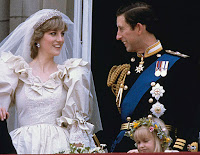
Much has been written about how Diana Spencer fell in love with an “image” of Prince Charles and not with the man. But she would not be the first person to objectify another, falling in love with a concept, a persona, an impression “instead of discovering who is really there,” as spiritual teacher Patricia Albere shared. In her book, Evolutionary Relationships, Albere wrote about the principles (including engagement, commitment, truth, trust, openness, intimacy, sensitivity, influence, and true autonomy) required to deepen any relationship—whether friend, family member, or lover—into a mutual awakening of beloved souls…into an “evolutionary relationship.” Then, ‘falling in love’ becomes something else altogether. “When you enter into an Evolutionary Relationship with a sexual partner,” explained Albere, “you have the opportunity to discover who your partner really is and what is possible between you…and what is needed to turn your relationship into a sacred marriage, a spiritual union.” 

Perhaps Diana had some intuitive, old-soul knowing of this kind of sacred union, but like most people, she didn’t know what it would take to have it—and especially, how to prepare for it. It takes emotional maturity, the courage to be transparent, a heightened level of spiritual awakening, patience—“a sacred connection cannot be forced,” as Albere wrote. 

I was reminded of what Meghan Markle said about the day she married Diana’s son Prince Harry—her wedding a global spectacle—with millions of people watching, appreciating, judging. “H and I are really, really good at finding each other in the chaos. When we find each other, we reconnect to, like, ‘Oh it’s you. It’s you.’” She added that it wasn’t as though the rest of it didn’t matter—the royal setting, the elegantly appointed trappings of the wedding—but “it feels temporary.” In such a spiritual union as they appear to have, it’s the connection, the love that feels real, feels eternal. (And those of us watching that lovely celebration of marriage could feel it as well.) Meghan’s friend Vicky Tsai, after attending the wedding ceremony, confirmed: “It felt like a moment where the world paused and celebrated love.”

Although Diana might have yearned for this level of intimate connection with a partner, in the pretense-riddled ‘arranged marriage’ framework of her Windsor world, such depth and harmony and spiritual bonding was not possible. Even with her heart-centered sensibility, all Diana had to go on when she married was her teenage romance-novel imagination, a wounded child’s neediness, and society’s outdated notion of the ‘institution’ of marriage. Her frustration and deep disappointment lashed out toward her husband with anger and blame, privately and, stunningly (given the ‘never complain, never explain’ mantra of the royal family), publicly.
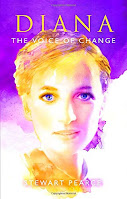
        In Diana: The Voice of Change, Stewart Pearce wrote how Princess Diana’s spot-lit marriage to the heir to the British throne put a spotlight on the archaic customs associated with marriage as well as on a woman’s autonomy—or lack of it. “Diana’s feminine force had disowned the negative masculine when she ‘outed’ Charles, calling for a new level of maturity and truth.” Feminist writers believed that when Diana found a way to speak out about the inauthentic aspects of their marriage—her bold actions condemned at the time by some as outrageous, even scandalous—other women were emboldened to find their voice. “This released the voice of millions of women, who felt that Diana had given them the right to speak,” Pearce added. He believed you could follow the thread that got unraveled in her public revelations about ‘men behaving badly’ directly to the Time’s Up and MeToo movements over two decades later.

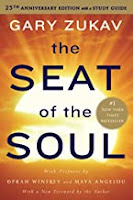
        As human consciousness was expanding in the last two decades of the twentieth century, parallel to Diana’s time in the spotlight, the nature of relationships and structure of marriage was transforming. In The Seat of Soul, Gary Zukav saw a more enlightened future when intimate relationships would be “spiritual partnerships” where both people thrive and the focus is on each other’s spiritual growth—evolving from the old, less empowering “five-sensory relationships.”  The more consciously aware “multisensory humans,” in Zukav’s words, naturally gravitate toward “spiritual partnerships.” (Maybe Diana sought guidance here since this culture-changing book was published in the late 1980s when her marriage was a gloomy mess.) Zukav explained that “spiritual partners help one another recognize parts of their personalities that come from love—such as gratitude, patience, and caring—and cultivate them by acting on them consciously.” Being conscious, awake to the subtleties of life, and emotionally courageous were key here. Zukav continued: “Spiritual partners also help one another recognize parts of their personalities that come from fear—such as anger, jealousy, and righteousness—and challenge them by acting from loving parts of their personalities (such as patience) when frightened parts (such as impatience) are active.” (Perhaps Diana wasn’t emotionally grounded enough, especially in those early years of marriage, to practice these principles, but this language, I believe, would have resonated with her.)

In addition to the cultural shifts in relationships and marriage at the time, the hard edge of masculine/feminine identity was also changing as many women were recognizing their “masculine” traits (speaking up for themselves, becoming leaders) and some men were acknowledging their “feminine” nature (being more compassionate and nurturing), shaking up an old societal template for gender. As human beings were evolving, long-accepted yet limiting ways of being and relating were dissolving—new guidelines were required for fully satisfying relationships. “The ‘Till death do us part’ paradigm within marriage,” Pearce wrote, “no longer could remain a meaningful construct for the bonds of deep relationship.”

        Looking back over the more than two decades since Diana’s death, Stewart Pearce was seeing how marriages that had been “sustained by the old ways of co-dependency” were ending and how both women and men were “releasing the obsolete stereotypes” of marriage so they could have relationships of deep connection of the heart. “At core, the patriarchy, which had flourished through a malformation of the masculine, was being transformed on the altar of the newly sacralized feminine,” Pearce continued with his usual passion. “Love, compassion, inclusivity, nurturing, and peaceful co-existence are what we yearn for, are what we seek out in our intimate relationships….” This sounds most ‘natural’ for us now, but at the time and in the environment in which Diana lived, when she declared these loving aspects missing in her marriage—indeed, in most marriages she saw in her aristocratic world—it was revolutionary. ~

[Part Two of this section from the chapter "A Woman's Inheritance" will be posted later....]

July 1, 2021

{Education of the Heart} Book Excerpt

July 1, 2021. Princes William and Harry unveiling memorial stature of their mother,
Diana, Princess of Wales, in the Kensington Palace Gardens.


Excerpt from 

Education of the Heart 

final chapter

The Spiritual Mission of a Princess

{my still-in-the-works book}


With the enlightening gift of hindsight, hazy fragments of life can fall into place: “Oh, that’s what he was trying to tell us.” “Oh, that was the real message of her life.” Millions of words have been written about Diana Spencer Mountbatten-Windsor’s life and death. Some focused on the superficial and sentimental, the fashionably theatrical storyboard of her life; others focused on glorifying the virtuous humanitarian, even romanticizing her ‘saintly’ nature. (So it goes with a beautiful and tragic charismatic figure.) It’s a more mindful version of the latter that interested me. A flawed yet deeply empathetic princess, under the brightest spotlight on the planet, stands up to the short-sighted patriarchal powers-that-be, puts heart over head, kindness over duty, love over fear. That’s not only courageous, but in a cynical and discordant world, it’s downright subversive! And looking back, this was Diana’s spiritual mission, a mission that ties directly to this present moment as women’s voices are leading the conversation. This is the reason many of us are here during this tumultuous consciousness shift: to anchor the receptive, mystical, powerful, primal energies of the feminine and the reflective, grounded, gentle warrior energies of the masculine—to anchor old soul values, compassionate impulses, and the Earth’s promise of paradise.  

“When he turned 18,” reported royal correspondent Katie Nicholl, “Harry vowed to continue Diana’s charity work, making a public pledge ‘to carry on the things that she didn’t quite finish.’” When Prince Harry turned 36, the same age as his mother when she died, he had some of the same concerns that she had about royal life—its advantages and its limitations. “This is a man who said he wanted to continue his mother’s work,” added biographer Omid Scobie. “We’ve long mourned Diana’s place on the humanitarian landscape, and here we have Harry, who embodies her values and is willing to dedicate his life to them.” Inspired by Diana’s love and experience, and his own deep commitment and empathetic nature, Harry put his wife and son first. He chose his heart.


When we make that kind of choice, a new world opens up, our path becomes clearer, our wings lighter, and the once improbable becomes destined. We find the courage to love, then love again; to let go, then let go again; to let go of the past that no longer serves our evolution in being human. “Human evolution” is the game at hand, claims spiritual visionary Gary Zukav, and it’s also what’s at stake. In this decisive time of the transformation of human consciousness, it’s no longer viable to postpone the sometimes-painful interior work—whether it’s our rage or jealousy or grief—it’s time to face it. And Prince Harry has established a platform with a worldwide audience to courageously lead the way. It’s a hero’s journey, a heroine’s quest, an intimate rite of passage we’re all to take. It’s a journey of a lifetime and it’s the journey each of us chose.  


We may be in a time where it feels like everything precious is at risk. But it’s important to remember that in “between times” like these our perceptions change, things may not be what they seem, miracles happen. This is the era of reconciliation. As we explore this feminine heartbeat pulsing through the world—getting stronger, more powerful, more focused—we reach out to the masculine energies to join in, to make a quantum leap together in creating this new era of harmony. So it’s fitting that we revisit Diana’s life-gift that broke open this “head to heart” revolution as a reminder that love is the only way in and the only way out. ~