September 13, 2018

{Amazing Women On the Titanic} 'Lucile' Costume Exhibition

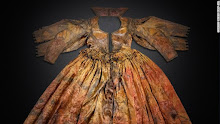
Original Lucile designs on display at the Titanic Museums
Step into a captivating world filled with grace and glamour as well as hardship and tragedy during the current presentations at the Titanic Museums in both Branson, Missouri and Pigeon Forge, Tennessee. “The Amazing Women of 1912 on Titanic” highlights unique stories of 19 groundbreaking women on board the legendary ship—like British barrister Elsie Bowerman, American missionary Sylvia Caldwell, best-selling author Helen Candee, and silent-film star Dorothy Gibson.

However, the elegant centerpiece of this event showcases a singularly “amazing” woman: Lucy, Lady Duff Gordon, the celebrated British couturiere who, under the name of Lucile, “was known for her innovative and provocative designs plus savvy self-promotion, attracting royalty, socialites and entertainment figures to her coveted brand—women whose influence set the fashions of the day,” explains her biographer Randy Bryan Bigham. “She helped usher in sexy lingerie, looser corsets, and the modern runway show,” he shares in Lucile – Her Life by Design.

Presented through November 2018, the “two-years-in-the-making” exhibits display a rare collection of original Lucile designs: beautiful evening gowns, wedding dresses (worn by the rich and famous), lingerie, accessories (including two fabulous hats), and charming ephemera—most items from Bigham’s own collection. Other garments and accessories from FIDM Museum in Los Angeles; Canada’s Fashion History Museum in Ontario; and private collectors Inger Sheil and Lisa Kominek.

To get a sense of the unprecedented scope of Lucy Duff Gordon’s achievements, Bigham remarked: “Lucile was one of the first important female haute couture designers, the first major London-based couturiere, and the first leading designer to open full scale branches in America. She also was the first top name in fashion to do lower-priced lines and to launch perfumes and cosmetics.”

By the time Lucy boarded the RMS Titanic in April of 1912 with her husband and secretary, she was acclaimed and wealthy—“a celebrity in her own right,” Bigham explained, with Lucile salons in London, Paris, New York and Chicago. She was traveling to New York incognito, away from the usual media spotlight that followed her, to be able to rest and relax on the grand luxury liner. Fate, however, would intervene!  ~

For more details about “The Amazing Women of 1912 on Titanic and the Lucile design exhibitions: TitanicBranson.com and TitanicPigeonForge.com


Photo credit for all exhibit images above:
Titanic Museum Attractions


Article printed in the Summer/Fall 2018 issue of Season Magazine


September 5, 2018

{Exhibition at Windsor Castle}

Exhibition
A Royal Wedding: The Duke and Duchess of Sussex
26 October 2018 - 6 January 2019

Queen Mary's circa 1932 diamond and platinum bandeau-style tiara
Silk gown designed by Clare Waight Keller for Givenchy
Sixteen-foot veil embroidered with the flora of 53 Commonwealth Countries 
Prince Harry's Blues and Royals Uniform
made by Savile Row tailors Dege & Skinner
(Since the Prince still needs to wear the uniform for official functions, 

an identical uniform made years earlier will be on display.)

August 16, 2018

{The New Royal Marriage}


My article, and book excerpt, "The New Royal Marriage," was recently published on Confluence Daily....and I'm sharing it below with some yummy images! Enjoy....

.....................................................
THE NEW ROYAL MARRIAGE


A few years after the grand and ritual-rich wedding of Prince Charles and Lady Diana Spencer in 1981—a time when the interplay of relationships, including the roles of men and women, were changing—spiritual teacher Gary Zukav released his groundbreaking book, The Seat of the Soul. He wrote about the end of the old marriage archetype (what he considered a “five-sensory” relationship focusing on the body and personality) and the emergence of “spiritual partnerships”—more consciously aware, “multisensory” ways of being in relationship.
   
Prince Charles was the last heir to the British throne to marry for dynastic duty first (and who was raised in that hands-off, secluded, in-training-for-the-crown severity); his sons were the first heirs to grow up with access to the openness of modern culture and with fewer restraints of the monarchy (thanks to insights of both parents.) This meant Prince William and Prince Harry could participate in a less-structured environment—but still be aware of their duty and place in the world—and be free to develop a loving, deep friendship with the woman they would marry.

Looking back, perhaps it was predestined for Charles and Diana’s spot-lit, world-stage relationship—fraught with jealousy, deception, and lack of mutual support—demonstrate an outdated model for marriage. Not finding the desired harmony in their own relationship, yet as destiny would have it, they produced two sons (one a would-be-king, one a prince of deep passion, both imbued with characteristics of each parent) who, as young men, apparently did.

We saw this deep connection during their weddings. I wrote the following about Prince William and Kate Middleton’s 2011 wedding in The End of the Fairy-Tale Bride, but it could also apply to the ceremony and lives of Prince Harry and Meghan Markle a few years later:
Like the best of weddings, William and Kate’s botanically inspired celebration had a sense of reconciliation and healing within relationships, families, communities, even religions. This is what I see their life mission will be about. And this nuptial day, therefore, was a blessing, a redemption for both Diana and Charles. “It was Diana who wired William with some innate radar to look for a soulmate who had a strong family bond,” wrote journalist and author Tina Brown. “She never had it with her own family, nor did Prince Charles,” but their first son has it and embraced it and included all of his families—Spencers, Windsors and Middletons—at the heart of his wedding day. And his Kate matched every royal moment with equal poise and tenderness, inspiring Brown to share about the bride’s choices: “Everything about her actions, to and for William, is about creating a feeling of safe continuity: You know me. I am here.”
Seven years later, as I watched Prince Harry and Meghan Markle’s sun-lit springtime wedding, it seemed that we all were witnessing not just a break in tradition, but something so transformative it was as though being baptized in pure light and redemptive love—being initiated into the most sacred depths of oneness. “It felt like another level of everything,” Oprah Winfrey, who had an up-close seat at the wedding ceremony, shared. “It felt like more than a wedding. It felt like a shift in culture. I left more hopeful,” she concluded.

Are these two royal couples representatives of a “new marriage”—a “spiritual partnership,” as Zukav imagined? Or perhaps it’s simply a return to the original purpose of marriage where the cultivation of a deeply connected, equal partnership is a natural way of relating for couples. William and Kate nor Harry and Meghan asked for their marriage to be a template, however, royalty is one of our most reflective archetypes so it’s just in the stars for them to take on a world stage life. Not right or wrong or perfect; not forever or even “happily ever after,” and certainly not a “traditional” marriage. (Is there really any such thing?) 
Nonetheless, these two relationships act as a mirror, so we can see ourselves just a bit clearer in one of the most problematic areas of life for people. “It would be difficult to find a human relationship that embodies a greater complexity than marriage—with its blend of the civil, social, spiritual, and physical,” wrote cultural mythologist Jane L. Mickelson. Our culture is filled with the shadow side of marriage. “For every folk and fairy tale that concludes, ‘and they lived happily ever after,’” Mickelson continued, “there is another that speaks of the betrayal and bitterness, the hostility and disappointment of marriage.” William and Harry knew this all too painfully well because of their parents’ mismatched marriage as did their mother because of her parents’ damaged union. (I called these marriages representatives of the end of the illusion—“the end of the fairy-tale bride.”)

In the aftermath of Charles and Diana’s shattered marriage, a very public royal divorce, and—as though following some Jungian script—the death of the much-loved princess, Dr. Caroline Myss, mystic and best-selling author, considered the outdated “damsel and knight” fairy story could finally be laid to rest. Echoing Gary Zukav’s vision for marriage, Myss wrote that we now begin “to uncover a new archetype—one that reflects the emerging era of partnership.”

Was this to be a new mythology for marriage where couples serve the highest good for each other? “This is how spiritual partnerships work,” Zukav explained. “You begin to set aside the wants of your personality in order to accommodate the needs of your partner’s spiritual growth, and in doing that, you grow yourself.” In this relational reframing, women and men are not substituting romance for intimacy; not settling for the illusion of love instead of the real thing; not relying on the other for their own happiness and fulfillment; nor are they denying the best of themselves so they can have some false sense of security and comfort.

The Duke and Duchess of Cambridge and the Duke and Duchess of Sussex may have royal titles, but it appears that their marriages—their love and relationships and deep commitment to their partners—are real and sincerely grounded, aligning with their modern, yet old soul sensibilities. Both Kate and Meghan have “brought a kind of grace under pressure to the royal family,” their husbands’ family, and I would suspect that sense of being comfortable-in-their-own-skin reinforces a closeness with their husbands.

It was Princess Diana’s tenacity and spirit that carved out a way for William to be king and have a marriage based on love and equality; and, in her demonstrative acts of unconditional love, gave Harry, younger at her death and maybe more vulnerable, the resilience to mend his broken heart and find a strong partner who matches his devotion and compassion. And Prince Charles played his part as he tenderly protected and guided his sons after Diana’s death; then, years later, boldly challenged the old monarchic code and, with William and Harry’s full-hearted support, married the woman he had long loved.

Perhaps we are drawn to these young Windsor couples because they remind us of the true nature of what “happily ever after” is to be—living a life you love, in service and in kindness to others. And perhaps our attraction to them is how their lives show us, in the words of beloved Sufi teacher Hazrat Inayat Khan, that, whether you are royal or just regular folk, “to discover the heart is the greatest initiation.” ~ 

[Excerpts from Cornelia’s The End of the Fairy-Tale Bride, available at Amazon, as well as excerpts from her book in progress, tentatively titled, A Memory of Beauty: The Spiritual Mission of a Princess.]


July 20, 2018

{Why Royal Weddings Matter} No. 11: The Honey Month


Enjoy the last of the 11-part series of WHY ROYAL WEDDINGS MATTER celebrating the marriage of Prince Harry and Meghan Markle. "The Honey Month"....posted on Confluence Daily and reprinted below! (Most articles in the series are excerpts from my book, The End of the Fairy-Tale Bride.)

...............................
The Honey Month

In our world of extreme media scrutiny, I love that the most famous newlywed couple on the planet took what appears to be a private honeymoon! “With the world watching,” wrote Elise Taylor of Vogue, “Prince Harry and Meghan, Duchess of Sussex, seemingly did the impossible: They snuck away on a two-week honeymoon.” (And, as of this writing, the media can only speculate on the location!)

The word “honeymoon,” in use since the sixteenth century as British historian Ann Monsarrat explains, is a derivation of a much older term, “honey-month,” describing the first weeks of the newlyweds’ life together at home, or at the home of friends or family, with the not so subtle intent of ensuring offspring. But these were considered rather “low-class words.” So, beginning in the eighteenth century, when it became fashionable for well-to-do couples to take some sort of trip following their wedding festivities, the occasion was called “going away,” thought a more genteel expression.

“Going away” became “the bridal tour” for the wealthy in the nineteenth century. For the British upper-crust, the fashionable thing was to do a tour of the Continent; for affluent Americans of the gilded age, it was to go abroad on a luxury ocean liner then visit the most exotic sites of the day recommended by Baedeker.

There’s a bit of intrigue associating the honey in “honeymoon” and the ancient legend of the honeybee’s luscious nectar with love and sex. In her book, The Hive: The Story of the Honeybee and Us, Bee Wilson muses how human civilization would have barely survived without the honeybee: its wax was used to create light in a dark world and its honey gave nourishment and medicine. But the honeybee also provided poetic mystery and “food for love”—from the devilish to the divine:

It is “sweet, like true love, and delicious, like carnal love, honey can be treacherous and sticky, like false love,” the author asserts. And there’s more. Its thick, syrupy-ness brings up a “dark side of human desire”—like this from Proverbs in the Bible: ‘the lips of an adulteress drip honey and her tongue is smoother than oil’. Yet “pure honey is precious and good, like married love”—as this line from the Highlander poem, Rob Roy, by Andrew Lang suggests: ‘Or will ye be my honey? / Or will ye be my wedded wife?’

Some believe the term “honeymoon” relates to the ancient Viking ritual when, for their aphrodisiac effects, “the bride and groom would eat honeyed cakes and drink mead for the first month of their betrothal”—quite the honey-month! However, the connection to honey and the name honeymoon or its true meaning “cannot be agreed upon,” Wilson continued. Like most early wedding rituals there are hazy origin myths, but what we know for sure is that “the use of honey in marriage rites has been a constant throughout the Indo-European world, and beyond.” For instance, in an age-old Egyptian marriage contract, the husband promised his wife a yearly gift of twelve jars of honey; in archaic Hindu wedding ceremonies, the author added, “the bride’s forehead, mouth, eyelids, ears and genitals were anointed with honey.”

Do we really ‘fall in love’ or do we just ‘fall into a honeypot’? Do we meet our beloved by chance or are we stung by Cupid’s honey-soaked arrow? In stories of mythology, honey plays its delicious part in romance. Becoming known as the young god of love, Cupid—the son of Venus, the Roman goddess of love, and Mars, the god of war—is not only famous for stealing honeycombs, but he also “fires arrows at his victims, sometimes dipped in honey” and they instantly fall in love with the next person they meet. Honeypot, indeed!

Here’s wishing Harry and Meghan many “honeyed” years of marriage! ~


[Excerpts from The End of the Fairy-Tale Bride: For Better or Worse, How Princess Diana Rescued the Great White Wedding. Available on Amazon.]


July 2, 2018

{Why Royal Weddings Matter} No. 10: Tokens of Abundance & Love

Here's the latest installment of my "Why Royal Weddings Matter" series for Confluence Daily...excerpts from The End of the Fairy-Tale Bride with updates from the recent wedding of Prince Harry and Meghan, Duchess of Sussex. Enjoy!

............................................................
Tokens of Abundance & Love

Most wedding rituals today are “rooted in the potent mix of tradition and superstition,” wrote Barbara Tober, former editor-in-chief of Bride’s magazine.  

Take the rhyme, something old, something new, something borrowed, something blue, and a sixpence for your shoe—the familiar little verse that became a beloved personal ritual for generations of brides. The rhyme itself may not be that old (first appearing in print in the nineteenth century according to my research), but the customs it describes have been around for centuries. In cultures worldwide and for as long as we know, there was some sort of ritual conjured up out of superstitious notions encouraging brides to tuck “tokens of abundance” (pieces of bread, a lump of sugar, bits of ribbon, a silver charm or coin) into their purse, glove, or shoe; or sew the item into their bodice or dress hem. This was all done in the desire to call forth good luck, great fortune—including the birth of a male heir—or some magical promise of love forever!

Shoe historian Cameron Kippen declares that throughout ancient times “it was widely accounted wearing something borrowed was lucky. The something borrowed varied to something golden or something stolen. A common belief was the bride would enjoy the same luck as the previous owner if the shoes of another happy bride were worn.” (And the good-luck superstitions extended to the groom by wearing old boots loaned to him for his wedding.)

The historian also reminds us that “a long standing bridal superstition stated no harm could befall a bride wearing blue.” Through the ages, wide-ranging references to the color blue surround it with compelling, even divine properties. The color is often associated with Mary, mother of Jesus, and Brigit, the Celtic goddess of healing and the arts; and in Ayurvedic wisdom, the color blue is linked with the throat chakra, or energy center, and inspires balance in our true self-expression. It is cited in Geoffrey Chaucer’s fourteenth-century The Canterbury Tales as a symbol of truth and faithfulness and Shakespeare fondly considered the “blue of heaven’s own tinct....”

With such rich folkloric history, it stands to reason that somewhere along the way a sentimental poet neatly put it all together in a romantic rhyme—some think derived from an old Italian saying, others believe it’s British in origin. Proving, once again, that wedding traditions have “complicated roots”—to borrow a phrase from Carol McD. Wallace’s book, All Dressed in White. Whatever the origin of the rhyming verse, nineteenth-century Victorians popularized it and even royal brides followed its feminine directives for their wedding day.

Princess Diana’s wedding gown designers, Elizabeth and David Emanuel, shared how they custom-fit the rhyme’s legacy for their royal bride:

The old was represented by the piece of Queen Mary lace that we used on the bodice and flounces while the new was obviously the silk dress itself. The tiara that Diana wore was a Spencer family heirloom—so something borrowed—and to complete the tradition, we hand-sewed a little blue bow into the back of the dress.

Following the rhyme continues to be a treasured ritual for many modern brides; not because of any “superstition,” but because it has a way of bringing together generations of women in conversations and remembrances over things we hold dear. A grandmother unpacks a precious family heirloom; a great-aunt shares something from her own trousseau and recalls stories from her mother’s wedding; a sisterly friend offers love, support and deep listening.

Meghan Markle, bride of Prince Harry, extended the rhyme’s sentiment to their post-wedding-ceremony evening party. After changing into a sleek and sexy white halter-neck dress, Meghan wore designer high heels with soles painted pale blue and a fabulous ring with a large aquamarine stone once belonging to her late mother-in-law. (Was the ring a surprise from Prince Harry? Was he in on the “something blue” conversation? Or do you think he simply opened his mother’s jewelry box one day for his beloved to select something of her fancy?)

The “something old, something new” rhyme seems to be infused with a kind of fairy-tale quality and delights of feminine mystique—is the mystery part of its appeal? I call the old-fashioned rhyme the most feminine of all wedding rituals. Whether a bride borrows her grandmother’s handkerchief; wears a gift of birthstone earrings or an antique lace veil; pins a blue silk ribbon to her corset or slips a sixpence coin into her shoe or his pocket, they have put something magically mysterious into motion. And what woman doesn’t become more attractive wearing a bit of mystery? ~

[Excerpts from The End of the Fairy-Tale Bride: For Better or Worse, How Princess Diana Rescued the Great White Wedding, available on Amazon, with updates from Prince Harry and Meghan Markle’s recent “something wonderful” wedding celebration! www.CorneliaPowell.com]


June 13, 2018

{Why Royal Weddings Matter} No. 9: What The Veil Reveals


Hope you've been enjoying my "Why Royal Weddings Matter" series on Confluence Daily! Latest installment reprinted below with yummy images!

What the Veil Reveals

Bridal veils made a comeback with Princess Diana in the summer of 1981 like they did in the nineteenth century with Prince Charles’ great-great-great grandmother. Although Queen Victoria’s short lace veil—a lyrical masterpiece of handmade Honiton lace—was “decorative only,” pinned to her chignon and falling softly over her shoulders, Diana’s was long, lush and sparkly and, breaking with royal tradition, covered her face for a much fussed-over “virginal” arrival into St. Paul’s cathedral on her father’s arm. Many feminists called it a “shroud.” And for some modern young women just beginning to revel in their independence and sexual freedom during this time, wearing a bridal veil did, indeed, seem a bit out-of-date, if not out-of-touch.

Not insensitive to world politics in the 1980s and ‘90s—the years I had my bridal art-to-wear shop in Atlanta—my focus, however, was helping a bride feel just as beautiful inside as she looked outside. I loved the look of the sheer illusion veil like Diana wore, it seemed to connect a woman with something deeply feminine and quietly mysterious. Worn over the face, enveloping the bride in a quiet reverie, the veil helped block out a busy, distracting world, moving her attention inward. Fashion designer Vera Wang considers “nothing quite as transformational as a bridal veil. The blend of sensuality and ritual is positively seductive.”

The bridal veil in the European-American tradition went in and out of fashion during the last two-hundred years or so. But Queen Victoria followed “royal rules” more than fashion for her wedding in 1840. “Since the earliest centuries,” explained author Maria McBride-Mellinger, “royal brides, who very often had never met their affianced, could not conceal their faces, preventing a last-minute substitution.” (And this practice for Windsor brides continued until Diana.) British historian Ann Monsarrat described the trend for the rest of us: “Wearing a veil over the face did not evolve until the 1860s and ‘70s; and the custom of arriving at the church, veil demurely down, and leaving triumphantly bare-faced, was an even later refinement.”

Most ancient civilizations have something in their heritage around maidens and bridal veils. “The most important element of a Roman bride’s dress was her veil,” reported McBride-Mellinger. “In fact, nubere, the term for veiling, was synonymous with marriage, and the day after consummation was known as the unveiling.” Modern brides, nevertheless, may choose to wear a bridal veil simply because it’s fetching and pretty, whether a “maiden” or not!

Of course, the new millennium brought the first of modern royal brides in 2011 when the lovely Kate Middleton wed Prince William. “When she came in with that veil over her face, it was almost ethereal, like she was coming through a cloud—an angel coming into the Abbey,” said one dazzled wedding guest. The sheer layer of ivory silk tulle, finger-tip length and edged with hand-embroidered flowers created by the Royal School of Needlework, was rather magical as it caught the wind and became the perfect accessory to complete Kate’s exquisitely crafted silk and lace gown.

Like Kate, Meghan Markle, the bride of Prince Harry, chose the romantic style of entering the wedding chapel wearing a sheer veil over her face, attached to a royal diamond tiara. Yet, as Kate’s father had done for her, it was Meghan’s groom who performed the intimate “unveiling” at the altar: lifting the veil covering her face, meeting his beloved’s steady gaze, and melting our hearts at the same time.

However, Meghan’s approach to her veil was unique. “The veil was a big part of the story for me,” couture designer Clare Waight Keller explained about Meghan’s bridal ensemble. She had created an unadorned, pure-white architectural prism-of-a-gown with a sweeping train for the bride, so the veil became the captivating showpiece, embracing royal connections:

Expertly stitched by artisans working hundreds of hours, there was over 16 feet of gleaming white silk tulle with distinctive botanical motifs hand-embroidered in silk and organza fluttering in three-dimensional delight along the veil’s edge. (Flora representing each of the 53 countries of the Commonwealth—orchids, water lilies and pansies; a daffodil from Wales, bunchberry from Canada, and Scottish thistle—as well as California poppies and wintersweet to honor Meghan’s old and new homes; forget-me-nots to honor the groom’s late mother; and the mythological crops of wheat symbolizing love and charity.) The countries, memories and sentiments represented in this trailing “wild garden” enchantment—carried by gleeful twin pageboys as though they were displaying the most precious and charmed work-of-art—all went on the journey up and back down the aisle with Meghan, just as the designer had envisioned.
 

Both Kate and Meghan followed Diana’s lead with their veils, bringing this spirit of beauty—femininity and stillness, sacred yet seductive—into the hearts of modern brides worldwide. And, in turn, Meghan brought a fresh modernity to the bridal veil beyond any “fairy princess myth” into something so irresistibly feminine and confident about feeling beautiful and mysterious: Cocooned in sheer silk tulle with her veil floating behind—leaving “princess blessings” in her wake—and being revealed into the eyes of her beloved. ~ 

[Parts of this article are excerpts from The End of theFairy-Tale Bride: For Better or Worse, How Princess Diana Rescued the GreatWhite Wedding, other parts are, of course, inspired by the recent royal wedding.]